
The idea of a smart home once sounded like something only luxury homeowners or tech enthusiasts could afford. Automated lights, voice-controlled locks, and intelligent heating systems used to come with high price tags and complex setups.
But that’s no longer the case. Thanks to affordable technology and modular smart devices, you can build a fully functional smart home even on a modest budget. Whether you live in a flat, rental property, or family home, there are cost-effective ways to make your space more comfortable, secure, and energy-efficient.
In this guide, we’ll walk you through setting up a smart home from scratch on a lowmart security gives you immediate peace of mind without breaking the bank.- to moderate-budget—starting with the essentials and gradually expanding to a personalized, connected home.
Identify Your Goals
Even before purchasing any device, it’s best to take a step back and understand why you wish to have a smart home. Regardless of whether we read experts’ advice, tips from retailers, or personal stories of real users, a common thread can be seen: individuals who skip this crucial stage end up wasting their money on products that they never actually utilise.
First, list down your objectives. Don’t ask yourself, “Which smart devices do I need?” Instead, ponder over “What irritates me each day, and how does automation help?”
- Save time and labour: Automating repetitive actions
- Improve comfort: Using voice commands, changing light scenes, or setting routines
Creating a successful smart home isn’t about buying the latest technology; it’s about creating a home that is built around use cases. The majority of real-life usage experience has shown that if you base your purchases on use cases instead of devices, you’ll spend less money at the end of the day. For example:
- If you forget to turn off lights, → Use smart bulbs with scheduling
- If your home is feeling unsafe, → Install a camera or motion sensor
- If your morning routine is chaotic, → Create a routine that turns on the lights and plays the news
You don’t want to turn your smart home into an expensive experiment. You should focus on these 3 core goals for your budget smart home:
- Invisible Automation
- High Spouse Approval (User Friendly for Everyone)
- Device Longevity (Avoid the Money Pit)
Start Small
It is also important to note that, according to all your guides and articles, you do not need an entire suite of smart gadgets for automation to be considered a smart home. In fact, your smart home becomes smart once you get at least one smart gadget that can be controlled via your smartphone.
A single smart device (for example, a smart plug or lightbulb) is enough to make a smart home a reality. This makes smart home technologies much more affordable since there is no need to spend a lot of money in order to enjoy their benefits.
As opposed to the idea of automating your entire home in a day, most of the sources suggest starting with bread-and-butter-type gadgets:
- Lighting bulbs for automated lighting
- Plugs to switch on and off your appliances
- Simple smart speakers
A start small approach transforms your home into an ever-expanding, viable system rather than a built-from-scratch, smart home. Beginning with just one or two devices will help you:
- Make better purchasing decisions by not wasting your money on unwanted devices.
- Reduce the complexity of installations and potential technical challenges.
- Build a smart home system that meets the needs of the user.
- Remain adaptive to technological changes in your smart home.
One Room at a Time
While learning about budget-friendly ways of creating a smart home, there is one key suggestion shared across all your sources: try not to automate the whole house right away. In terms of setting up a smart home, certain zones should be addressed first. Specifically, those include:
- Living room: Lighting, entertainment systems, and voice control
- Bedroom: Comfort features, routines, and sleep automation
Such an approach allows checking whether all devices work together properly before moving further. The next useful tip is to start the process of setting up a smart home from the ground floor.
- Areas where you will light mechanically
- Into & out of a building at security doors
- Common living areas with the most use
Starting with the above areas on your budget helps you to have the basic equipment needed to have your home automatically operated with: The Most Commonly Used Smart Protection Equipment (Affordable) & Wi-Fi-Connected Lighting.
By doing so, your budget will not be spread thin, but you will get the most important equipment first. Trying to automate everything at one time typically results in:
- Spending too much on unnecessary equipment
- Not Having Components Work Together After They are Installed
- Creating An Installation That is Difficult to Use
Focus on the Task
Your sources will confirm that it’s essential when you consider how some real-life users successfully designed their systems. The trick here is solving one problem effectively before you move on to the next one.
In the process of choosing smart home devices, one of the best approaches is concentrating on solving one specific problem:
- Activating motion sensors
- Turning the lights on for 10%, not 100%
- Executing your task without any interference
Again, this is an excellent example of affordable smart home devices that work. There are various reasons why beginners spend too much money on smart home devices. For instance, some people buy devices because they seem cool or because of their features.
This is another major reason people pay too much for smart homes. Devices bought simply because they are popular, rather than needed, are likely to end up as useless additions, requiring additional purchases within the ecosystem.
However, some sources advise users to start with the problems related to daily usage. This is a perfect illustration of why people buy things: “The 3 a.m. Puppy Problem.” People who want automation do not start off with the big picture; instead, they want to avoid the irritation of being woken up late at night by their dog moving around.
This is a single frustration that can be solved with a simple motion-triggered dim light, with no need for an entire expensive ecosystem.
- Auto-switching off appliances
- Scheduling lights depending on the established routine
- Security triggers
When you focus on task completion, you will limit yourself to buying affordable smart home technologies that work off Wi-Fi and are simple to install, thus limiting unnecessary expenditures.
Central Hubs and Ecosystems
One of the first considerations in building a budget smart home is finding the right hub or ecosystem. It comes up again and again because of one simple rule in a smart home: Devices become useful when they’re capable of functioning together as part of one cohesive system.
A hub or equipment serves as the “brain” of your system; it connects all of your devices and provides a way for them to communicate via one convenient platform. That eliminates the issue commonly faced by beginners, which is a disjointed setup with several incompatible apps and devices.
Even well-chosen budget smart home devices will be wasted without proper planning of the entire system. The reason is simple: In the lack of a hub or ecosystem, a person ends up managing several apps dedicated to lights, surveillance, etc. This makes the need for planning in advance apparent.
Apple Home Kit
Regarding the selection of an ecosystem as a way of setting up a budget smart home, it is essential to note simplicity, reliability, and sustainability as key factors. A setup of a budget smart home should be easily operable by all members of a household, not only the one who sets it up.
This approach is quite consistent with Apple HomeKit’s approach to smart homes. It makes sense to choose Apple products for your smart home. If you already own an iPhone, iPad, Mac and Apple Watch, then using HomeKit is probably going to save you a lot of money because there is no need for an additional hub or third-party application to help control it, making your smart home installation a more straightforward process.
Most of the items that are compatible with HomeKit are connected through your Wi-Fi network and will continue to work through your Wi-Fi even if you lose internet access. Local processing of commands is one of the major benefits of Apple HomeKit.
Automation can occur independently of the internet connection, as commands are processed in your own home. There is no need to rely only on cloud servers. As a result, privacy and reliability increase.
- Control of devices occurs via Apple Home
- Voice control is enabled via Siri
- Automation is easy to set up
Google Home/Nest
In choosing the best way to build a budget smart home, the Google ecosystem makes it incredibly easy to get into the world of smart devices. Ecosystems based on Google devices, particularly like Nest Mini and Nest Hub, aim at being accessible, budget-friendly and incredibly convenient for newbies.
Google’s ecosystem is perfect for people who want quick installation and simple control without any complicated procedures. The first key feature of the Google ecosystem in regard to automation is its ability to create routines.
Routines let you easily automate everyday things like lights, alarms and even reminders with no extra effort. In addition, Google Home also provides more sophisticated solutions through its script editor, which can be very useful once users start expanding their smart home.
Such scalability of the Google ecosystem is crucial for a budget-smart home since it lets users start with just one device and grow it to something bigger without having to change anything.
Amazon Alexa/Echo
There are many examples of compatible low-cost or low-priced smart home products that work with Alexa, including plugs, lights, cameras and sensors. Therefore, Alexa will provide a tremendous amount of flexibility for consumers looking to use low-cost devices to create their smart home ecosystem by allowing them to mix and match different low-cost devices from different manufacturers.
Another advantage of using Amazon Alexa or ECHO is that most starter kits for beginners combine an Echo device with either smart light bulbs or smart plugs. Due to regular bundle discounts on such days as Prime Day and Black Friday, Amazon makes it possible for Alexa to be the most inexpensive route to automating a smart home.
The cost is often reduced to a minimal amount for beginners. This means most beginners can become part of the smart home automation trend very quickly with little financial commitment.
Thus, Amazon Alexa or ECHO is especially appealing to new smart home users who are looking for instantaneous results without making a huge investment in multiple smart home systems.
Home Assistant
It is ideal for generic smart devices. Also, it might be challenging for absolute beginners. One of the most significant benefits offered by Home Assistant in its technical and budget-friendly articles is the flexibility to incorporate virtually any device into a unified platform. With Home Assistant, users can merge:
- Budget Wi-Fi smart plugs
- Affordable Zigbee sensors
- Generic and niche smart devices
- Devices produced by various ecosystems
Users don’t need separate applications to control each item, but can use a centralised dashboard that can be configured according to their preferences. For those looking to construct inexpensive smart home devices working via Wi-Fi, this advantage becomes invaluable.
A locally-controlled smart home is an example of a solution that provides reliability through local hardware. You should have no outages from cloud services. This still provides you with the same benefits that a local source offers:
- Faster response times
- Better privacy
- Better automation stability
- Lower dependence on online servers
Matter Protocol
Another key consideration that unifies many contemporary tutorials on building a smart home is the need to invest in a future-proof system that will not become obsolete too soon. This is where Matter protocol can be particularly helpful.
According to experts who deal with ecosystem planning, choosing Matter-compatible products will always pay off in the long run because affordable smart homes require flexibility to evolve. Compatibility with different brands of devices is the main benefit of Matter.
Contrary to existing ecosystems that lock the user inside the specific manufacturer’s environment, Matter provides interoperability between Apple, Google, Amazon, and other brands of devices in the same smart home environment.
- Enables seamless expansion of the network over time
- Prevents premature obsolescence of budget devices
Smart lighting
From your research sources, smart lighting comes out as the most practical and affordable way to start creating your smart home. This is always the initial step since it offers quick returns and does not require elaborate configurations.
Smart lighting is one of the easiest ways to start implementing affordable home automation. Smart lighting has many purposes other than providing comfort since it can help to:
- Ensure safety: By configuring the lights to appear on when you are away
- Save energy: By turning off lights in unoccupied areas
- Create comfort: By adjusting the light levels via mobile applications
Philip Hue
Depending on the size of your home, you could purchase a typical starter kit for approximately £90, which has the added benefit of being connected to a dedicated hub, known as the Hue Bridge, that:
- Reduces the amount of traffic on your home Wi-Fi.
- Enhances device reliability with respect to multiple devices.
- Prevents the slowdowns associated with network congestion and the need to upgrade your modem or router.
This makes Hue particularly beneficial for consumers constructing a scalable smart home system where performance and reliability are more important than initial cost. Hue is also worth considering as a long-term investment, rather than a low-cost entry into a smart home, for consumers who expect to continue expanding their smart home in the future.
IKEA tradfri
IKEA TRADFRI is often cited by budget-smart homes sources as the best ecosystem among beginners due to excellent value for money. Based on the advice provided, it is recommended for people looking for affordable smart devices operating via Wi-Fi or hub installation.
It is widely used by those people who are gradually creating their smart home since it offers reasonably priced Zigbee-enabled devices.
In addition to Apple Home, many new-generation products offered by IKEA are compatible with Matter. The ecosystem features the following characteristics:
- Reasonable price
- Simple installation procedure
TP-Link Tapo / Kasa
This brand provides 2 separate collections of products:
Kasa Tapo
Famous for its smart plugs and smart switches. Specialising in budget smart cameras and smart bulbs
Associated with great stability and ease of use. Often considered to provide outstanding value for money.
Best suited for novices who wish to achieve simple automation. Some more modern models are matter-certified
TP-Link is an adequate choice of brand for people who need affordable and stable smart home gadgets working via Wi-Fi without much hassle and knowledge of technology.
Wyze Bulb Colour
Wyze emerges as one of the main choices in your sources when looking for budget lighting for home automation purposes. The key features that distinguish Wyze bulbs from others include:
- Affordability, one of the cheapest full-colour smart bulbs
- Basic automation functionality available at a low starting price
Connection instability and occasional random disconnects are among the most commonly reported issues, especially in larger Wi-Fi-heavy smart home setups. Nevertheless, there are also some weaknesses associated with the products you have found:
- Colour accuracy is rather poor compared to top-of-the-line models
- Consistency of performance leaves room for
Smart Switches
As we may have noted, smart switches are constantly advised as one of the most convenient solutions for the smart home environment, especially for families. Differentiating from smart light bulbs that replace single light fixtures, smart switches are:
- Controlling an entire lighting circuit at a time
- Compatible with already installed regular “dumb” light bulbs
- Functioning as regular wall switches
This allows several people to operate them without requiring any application or voice-controlled smart assistant. Smart switches come with 2 significant benefits:
Affordability Use for Families
Replacing multiple light bulbs with one switch allows automating an entire room, making smart switches a preferable choice in terms of cost-efficiency. Physical control via wall switches makes smart switches more user-friendly within family houses compared to other app-dependent solutions.
Security and Monitoring
When researching how to set up a smart home on a budget, you notice that security and monitoring come up repeatedly as one of the best ways to invest in a smarter house. Compared to a conventional alarm system that comes with expensive installation fees and ongoing charges, smart security gives you immediate peace of mind without breaking the bank. If you’re planning a complete connected home setup, understanding the overall smart home installation cost can help you prioritise security devices and avoid overspending on unnecessary equipment.
Security and monitoring equipment should not be considered as accessories to your budget-friendly smart home; these devices provide one of the best returns on investment. Investing in such things as a subscription-free doorbell camera, an efficient camera system, and sensors can offer you safety and efficiency at low prices.
According to guides, even an elementary setup consisting of a camera and a video doorbell provides increased awareness and security for your home. As such, installing smart security systems ranks among the most practical smart homes you could create. With such systems, you can:
- Watch your house while being away from home using your smartphone
- Get alerts for any unexpected happenings
- Keep recordings for future reference
Video Doorbells
In most cases, getting a video doorbell becomes your first entry point when setting up your affordable smart home security system. It is especially important in the light of competing brands, which all require regular subscriptions, which might become quite costly at some point.
Over several years, avoiding subscription fees can save homeowners hundreds of pounds compared to cloud-dependent doorbell ecosystems while still providing reliable monitoring and recording features.
Products like the Reolink Wi-Fi Doorbell are often recommended because they provide premium security features without forcing users into expensive monthly subscriptions. This makes them particularly attractive for budget-smart home setups focused on long-term savings and reliability.
- 24/7 uninterrupted surveillance
- No subscription fees per month
- Local storage options
Indoor/Outdoor Cameras
It is worth mentioning that this recommendation corresponds in terms of selecting durable and efficient products.
As regards indoor cameras, there are some models recommended by your sources, which are:
- Cheap
- Easy to install
- Excellent choice for baby monitoring, pets or just overall activities
Budget-friendly models such as the TP-Link Tapo C120 are frequently recommended because they combine low cost, easy setup, and dependable image quality for indoor monitoring. The following are the advantages of outdoor usage:
- Increased reliability
- Continuous surveillance throughout the day
- Long-term security solutions
Wired cameras are generally preferred for long-term reliability and continuous recording, while battery-powered cameras are easier to install but may require more maintenance and charging over time.
Smart Locks
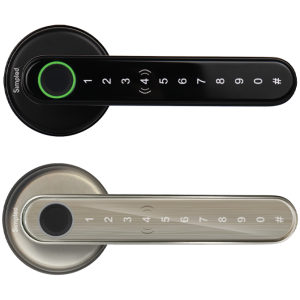
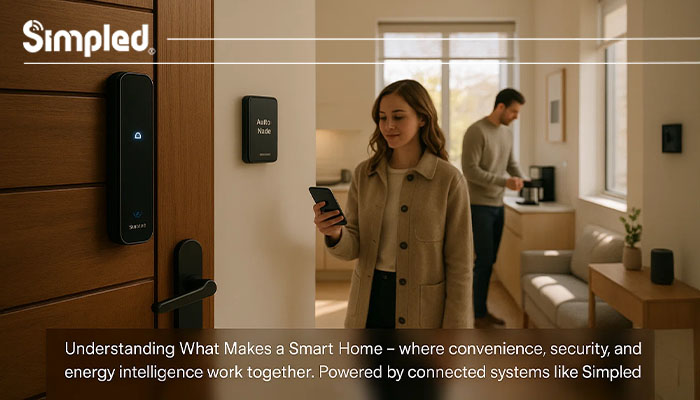
Smart locks add an extra level of convenience, safety and access control possibilities for a budget smart home. In fact, you are suggesting such devices which will help you upgrade old locks easily without having to buy new ones.
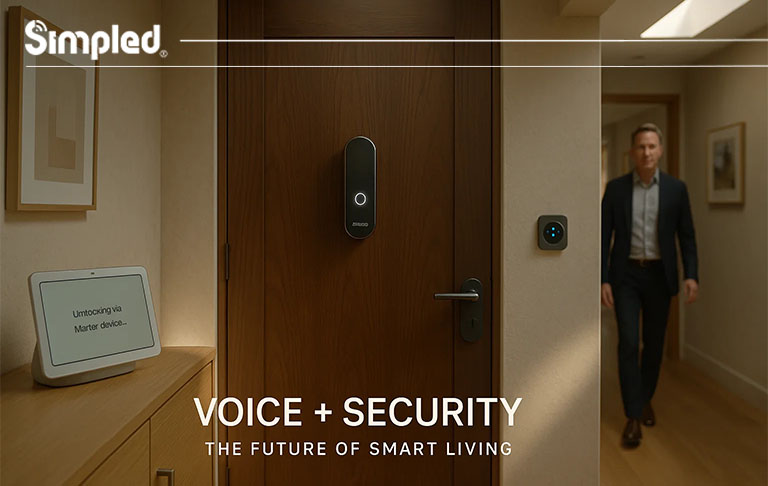
Devices such as the Kwikset Convert allow homeowners to upgrade existing deadbolts instead of replacing the entire lock system, making smart locks significantly more budget-friendly. Also, it will allow you to get better results:
- Apple Home Key compatibility
- Quick and dependable fingerprint scanner
- Increased compatibility with home automation platforms
Models like the Aqara U100 are especially popular because they support Apple Home Key integration alongside fingerprint access and broad smart home ecosystem compatibility. These characteristics are not only useful; they also provide a more trustworthy and extensible alternative to today’s home.
Leak Sensors
Of all of the Smart Home solutions available today, leak detectors are probably one of the most undervalued and cost-effective solutions. They are widely regarded as a critical tool in preventing catastrophic water damage, thus making them a requirement for any home with limited funds.
This is consistent with investing in devices that help prevent large-scale losses and not merely for the purpose of convenience. A fantastic source for leak detectors would be IKEA leak detectors, which:
- Cost about £10
- They are much less expensive than competing brands
- Have a built-in siren for immediate notification
Motion Sensors
Although motion sensors are sometimes referred to as the brains of Smart Home automation, they are in fact able to automatically respond to movement and to trigger the various functions of the Smart Home.
Some examples of the best features of motion sensors are triggering security notifications and
automating regular routines without the need to be manually activated. They utilise standard AAA batteries, which are less expensive and easier to deal with, and they are reliable for routine automation.
This is a clear benefit that will persist over time since AAA batteries are both cheap and easily obtainable, unlike rechargeable batteries that have to be charged. Such a little thing will have a great impact on the future, lowering the price of maintenance for these efficient gadgets that operate using Wi-Fi.
Appliances and Controls
One valuable insight provided on how to set up a smart home on a budget is that there’s no need to purchase new smart devices for all of your household appliances. Control is indeed a key component of building your smart home, allowing you to create a robust and efficient system at a minimum cost and effort.
Appliances and controls demonstrate that building a smart home is not about buying new things but making improvements to your current ones.
When combined, they constitute the basis for an efficient, cheap, and easy-to-install system that fits the objective of building a smart home without spending too much money.
Smart Plugs
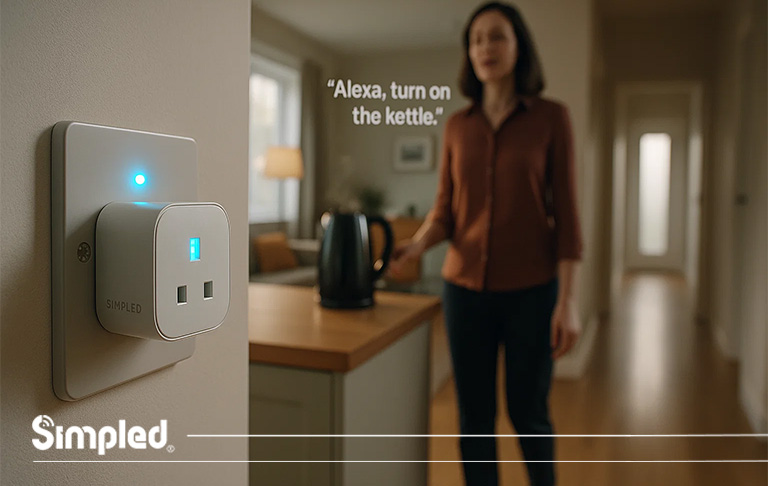
The use of smart plugs is the ultimate game-changer for budget smart home systems. The reason behind this is that these inexpensive devices let you transform any appliance into a smart gadget for only £10-£15. Using smart plugs, you can control:
- Lighting fixtures
- Coffee makers
- Fans
- Entertainment systems
All via smartphone or virtual assistants. Guides stress the fact that smart plugs are one of the top value-for-money options available. In addition to their convenience, they also provide:
- Energy savings through turning off powered equipment
- Organising your daily tasks via a schedule
- Being able to access or control them while they are or are not there
- Temperature control via smart thermostats
Smart Thermostats
Thermostat systems are one of the largest contributing upgrades in comfortable living versus energy & costs. Some experts note systems by many manufacturers, like Hive and Tado, based on two technological features:
- Geolocation: When you are away from your home, they automatically apply a volume of heating.
- Scheduling: preplan daily amounts of heating based on daily planned events.
The biggest benefit is saving energy since systems such as Hive and Tado use less energy to heat homes when no one is around. It has been proven that smart thermostat systems have significantly decreased utility costs and contribute to overall household budget savings.
Beyond utility cost, smart thermostats can assist with repairing your home by avoiding burst frozen pipes and the cost associated with those repairs. Smart thermostats control the temperature automatically at minimum levels, providing additional savings for homeowners in thousands of dollars in home repair due to a broken pipe.
Therefore, smart thermostats are a financial protection mechanism rather than just one of convenience.
Robot Vacuums
Robot vacuums are a valuable solution for minimising time when cleaning your home, especially for working families and individuals. Robot vacuums that are low budget, like Eufy E25 models, provide many features, like:
- Preprogramming of cleaning schedules
- Cleaning automatically
- Having a reliable basic cleaning performance
While not having the same advanced features as high price point robotic vacuum models with mapping technologies (premium models), budget-friendly robotic vacuum models provide the best solution for users interested in home automation with limited budgets.
Time saving is the most important advantage of this technology. Floors are washed every day without the necessity to do so manually.
Maintenance will become easy. It will contribute to better hygiene, thus making the environment more comfortable. As can be seen, it fits perfectly into the concept of a smart house, which implies minimising routine actions without involving additional spending.
Smart Buttons
Smart buttons are devices that are needed to cover certain situations that are called edge cases. Smart buttons allow you to perform:
- Fast control
- One-click action automation
- Easily understandable control, even for non-tech users in the family
Smart buttons are also inexpensive, easy to install and very intuitive. Examples of such buttons include:
- The bedtime button turns off all the lights
- Leave the home button to turn off the appliances
- A button for a guest, allowing them to turn on and off the equipment without installing an app
Budget Tips
Speaking of tips on creating an affordable smart home, your sources and video tips consistently stress one important principle: spending money wisely does not mean purchasing inexpensive gadgets, but choosing the right products to get more out of less.
The best way to save when constructing a smart home is through such actions as buying used devices, buying at the right time, and refraining from paying extra for some expenses.
Buy Used/Marketplace
The first tip discussing how to set up a smart home on a budget is purchasing second-hand gadgets. There is plenty of high-quality equipment available on platforms such as Facebook Marketplace and eBay, for example, in such forms as smart hubs, sensors and lighting kits.
These devices are sold in good condition, for only a fraction of their price and for people trying various ecosystems. It goes well, particularly for those who want to experiment with:
- Smart hubs
- Zigbee devices
- Basic automation systems
Shop Sales Events
The other lesson is very straightforward: You shouldn’t ever pay full price for smart home devices. Major sales events often have retailers and ecosystems that sell smart home devices at very large discounts.
Examples of major sales events when you can find deep discounts on smart home devices:
- Black Friday
- Prime Day
- Sales or seasonal promotions
Prices for devices such as smart speakers, bulbs, and plugs typically drop by 50% or sometimes more during these events. Having access to the ability to purchase smart home devices at discounted prices can significantly improve your ability to build a system because it will allow for:
- Purchasing higher-quality devices for the money
- Expanding your whole installation much quicker
- Remaining within your budget while still increasing performance
DIY Raspberry Pi
For people who desire low-cost home automation using the most comprehensive level of control, all of the sources referenced their recommendation for using DIY solutions, particularly the Raspberry Pi.
A Raspberry Pi is a low-cost, small computer that can be used for several different smart home automation purposes, including:
- Running Home Assistant (or other systems)
- Creating custom automations
- Constructing your own smart home hub (or other systems).
You will receive professional-grade functionality with a DIY system for a much lower price. Although a level of technical knowledge will be necessary, the DIY smart home automation approach is one of the most effective ways to implement an automated home.
Some of the benefits you will experience from using a DIY system to build a smart home include:
- Complete control of your system
- No dependency on paid-for services
- Combining multiple types of devices into one control panel
Avoid Subscription Fee
Among the key budget considerations highlighted by your sources is the avoidance of subscription fees whenever possible. Smart home devices, particularly those related to security, tend to incur monthly fees for:
- Cloud storage
- Additional features
- History of videos
Select products from brands like Reolink, TP-Link Tapo and Simpled. These products have the following characteristics:
- Storage using SD cards
- Lack of compulsory subscriptions
- Full functionality without further payment
How to Set Up a Smart Home on a small Budget
Setting up a smart home on a small budget in 2026 is a gradual process that prioritizes high-impact, low-cost devices to solve everyday challenges.
1. Choose One Core Ecosystem
To avoid future compatibility issues, start with one free smartphone app or a low-cost smart speaker that serves as your central “brain”
- Amazon Alexa: Best for ease of use and affordability, with speakers like the EchoPop often available under £25.
- Google Home: Excellent for integration with Google services; the Nest Mini or Nest Hub (2nd Gen) are top budget picks.
- Apple HomeKit: Best for privacy, though compatible devices can sometimes be more expensive.
Open Source: For advanced users, Home Assistant on a Raspberry Pi offers total control with no subscription fees.
2. Start with Budget-Friendly Essentials
Focus on devices that offer the most value for the least investment:
- Smart Plugs: The cheapest way to automate “dumb” appliances like lamps or coffee makers. These offer huge value, letting you automate non-smart devices like fans, heaters, or coffee makers affordably.
- TP-Link Tapo P100/P110: Highly rated and often under £10.
- Smart Bulbs: Provide instant automation for around £10–£15 per bulb.
- Budget Picks: Brands like Wyze, Govee, and Sengled offer color-changing bulbs for a fraction of the cost of premium brands.
- Smart Security Cameras: Affordable monitoring without professional installation.
- Wyze Cam V2 / Tapo C100: Reliable indoor cameras often found for around £20–£25.
3. Prioritize Needs
Decide if energy savings (thermostat), convenience (lights), or security (doorbell camera) is most important to guide initial purchases.
3. Maximize Your Budget
- Buy in Bundles: Multi-packs of smart plugs or bulbs often have a much lower per-unit cost than single items.
- Avoid Subscriptions: Prioritize cameras with local storage (microSD slots) like those from Tapo or Wyze to avoid ongoing monthly fees.
- Repurpose Old Tech: Turn an old tablet into a dedicated smart home controller or use an old smartphone as a temporary security camera.
- Shop Sales Events: Time your purchases for events like Amazon Prime Day or Black Friday, when smart speakers and starter kits are frequently discounted by 40% or more.
4. Focus on Automation (Routines)
The true value of a smart home is free. Use your ecosystem’s app to create “Routines” that automate multiple devices at once:
- Good Morning: Turn on the coffee maker and gradually brighten bedroom lights.
- Away Mode: Turn off all lights and arm security cameras when you leave.
- Energy Saver: Automatically turn off space heaters or fans after a set period.
How to Set Up a Smart Home on a medium Budget
Setting up a smart home on a medium budget involves prioritizing high-impact devices while ensuring long-term compatibility. By focusing on a central ecosystem and strategic DIY upgrades, you can achieve a sophisticated setup for approximately £500–£1,000 ($600–$1,200).
1. Choose a Primary Ecosystem
Select one “brain” to ensure all devices communicate seamlessly.
- Amazon Alexa: Leading choice for affordability and vast device compatibility.
- Apple HomeKit: Best for privacy and users already in the Apple ecosystem.
- Google Home: Strong choice for those heavily invested in Google services, though some experts find its automation routines less reliable than competitors.
- Future-Proofing Tip: Prioritize devices labeled with Matter, a universal standard that allows gadgets from different brands to work together.
2. Core Smart Home Investments
A medium budget allows for multi-room coverage of essential categories.
- Central Hubs:
- High Value: Amazon Echo Dot Max (~£100) includes a built-in smart home hub.
- Visual Control: Amazon Echo Show 8 (~£159) for managing camera feeds and routines via a touchscreen.
- Lighting:
- Primary Areas: Use smart bulbs like Philips Hue or Wyze Color Bulbs for customizable ambiance.
- Budget Hack: Use smart plugs (e.g., TP-Link Kasa) to automate “dumb” floor lamps and small appliances like coffee makers.
- Security:
- Doorbell: Arlo Video Doorbell (2nd Gen) (~£50–£80).
- Indoor Cameras: Tapo C110 Mini Indoor 3MP Wi-Fi Security Camera (£24.99) offers high resolution without high subscription costs.
- Climate Control:
- Thermostats: Amazon Smart Thermostat (£51.86) or Google Nest Thermostat (£70) can reduce energy bills, helping the system pay for itself over time.
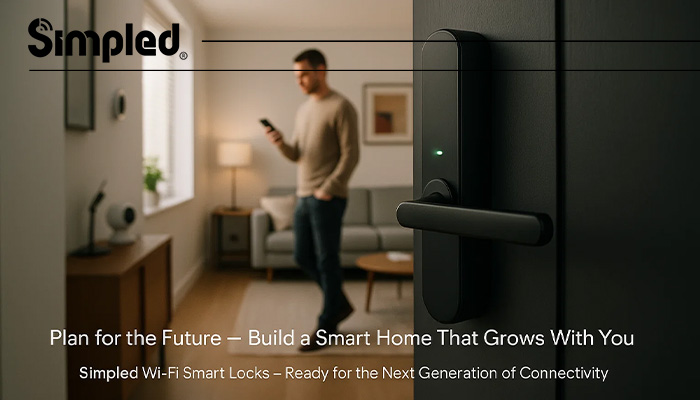
Budget Planning: build a smart home setup in stages — even under £400
Here’s how you can build a smart home setup in stages — even under £400:
| Device | Example | Approx. Cost (UK) |
|---|---|---|
| Smart Plug | Wi-Fi or BLE Plug | £10–£15 |
| Smart Bulb | Colour/White | £15–£20 |
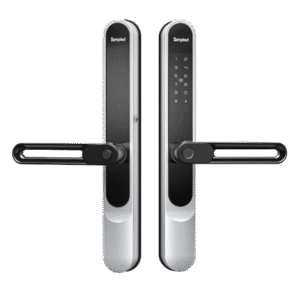
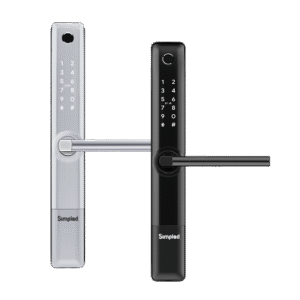
| Smart Lock | Simpled SS Slim | £300–£350 |
| Smart Door Viewer | Simpled VP Peephole Camera | £37 |
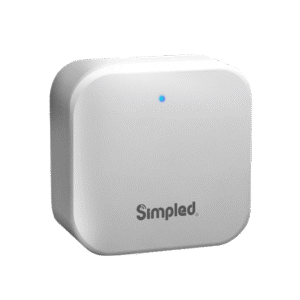
| Smart Hub (optional) | Alexa/Google/Matter | £40–£70 |
Total: £400, depending on configuration.
And the best part — you can start with just one or two items, then add more over time.
What budget-friendly smart home gadgets offer the best value? (in the United Kingdom)
There are several affordable smart home gadgets in the UK that have great value and are perfect for those setting up a smart home:
- TP Link Tapo P110 Mini Smart Plug: £9.99
- TP Link Tapo P100 Wi Fi Smart Plug: £9.99
- SONOFF BASICR4 Wi Fi Smart Switch: £6.14
- Blink Mini Indoor Security Camera: £18.99
- Govee Thermo Hygrometer Sensor: £17.52
- Aqara Door and Window Contact Sensor: £15.29
- Amazon Echo Dot Smart Speaker: £54.99
- Xiaomi Smart Home Hub 2: £27.99
Top Budget Smart Home Gadgets UK (Best Value)
- TP Link Tapo P100 Wi Fi Smart Plug:
Another super-cheap smart plug solution. No hub needed, and it’s compatible with voice control via Alexa and Google Assistant, ideal for smartening up regular devices.
- SONOFF BASICR4 Wi Fi Smart Switch
One of the cheapest smart switches on the market to control lighting or other wired appliances. A great way to begin smart home automation without spending a fortune.
- Blink Mini Indoor Security Camera
A HD indoor camera, night vision, motion detection, remote app control and a budget-friendly security solution.
- The Govee Thermo Hygrometer Sensor
It is an inexpensive way to keep tabs on both temperature and humidity and can be useful for many reasons including: to create a climate conscious home; provide for plant care; and maintain conditions in a nursery.
- Aqara Door and Window Contact Sensor
This is useful for monitoring new entrants or as an automatic trigger for events.
- The Amazon Echo Dot
It is a small smart speaker that allows you to use your voice to control your devices, and is therefore an excellent device to assist with the automation of your daily activities.
- The Xiaomi Smart Home Hub 2
This is an inexpensive way to connect together multiple light sources, sensors and other controls and therefore is great if you are looking to construct a coordinated system
What Makes These Great Value
- Easy use: no hub is needed, connect to Wi-Fi and has application based control
- Supporting voice assistant option: Devices are in good connection with Alexa or Google Assistant for this option.
- Smart automated options: These devices provide tracking energy and security notifications or other functionalities.
Pro tip: Use budget-friendly devices and upgrade to cameras or smart hubs when you need automated options. Pair good budget sensors like Govee or Aqara with voice assistants to provide a special smart home experience for yourself without a large amount of money.
Can I find affordable smart home tools that are easy to install in the UK?
Yes. You can definitely locate budget permitted smart devices available here within the UK with regards to installation ease. As a novice user of smart devices, you will find numerous general gadgets to be very simple to use because most will simply plug into an electrical outlet and connect instantly with either your phone and voice controlled device without any complex wiring tasks required on your part.
Best Easy-to-Install, Budget Smart Home Tools
Smart home tools and Prices:
- TP Link Tapo P110 Mini Smart Plug: £9.99
- TP Link Tapo P100 Wi Fi Smart Plug: £7.48
- SONOFF BASICR4 Wi Fi Smart Switch: £6.14
- TP Link Tapo Home Security Camera tapo c100: £16.99
- Tapo C220 2K Pan/Tilt Camera: £24.99
- TP Link Tapo T310 Smart Sensor Temperature/Humidity: £15.99
- Eufy Motion Sensor t8910021: £24.99
- Amazon Echo Dot Smart Speaker: £54.99
2 Suggestions (Items cost Under £100 each)
- Smart plugs with voice control (Tapo P110 + Echo Dot): Full smart routine setup for approximately £70.
- Camera (Tapo C220) with motion sensor: Both of which are easily connected and typically do not require additional hardware.
Conclusion: Smart Living Starts Small
Creating a smart home on a budget isn’t about how many gadgets you own — it’s about how well they work together. By starting with essential devices, using energy-efficient technology, and expanding gradually, you can enjoy comfort, safety, and savings all in one connected ecosystem.At Simpled, we believe innovation should be accessible and practical. Our smart locks, digital viewers, and connected accessories are designed with simplicity, security, and style — making your smart home journey both affordable and empowering. Start small. Think smart. Live securely.



Leave a Reply