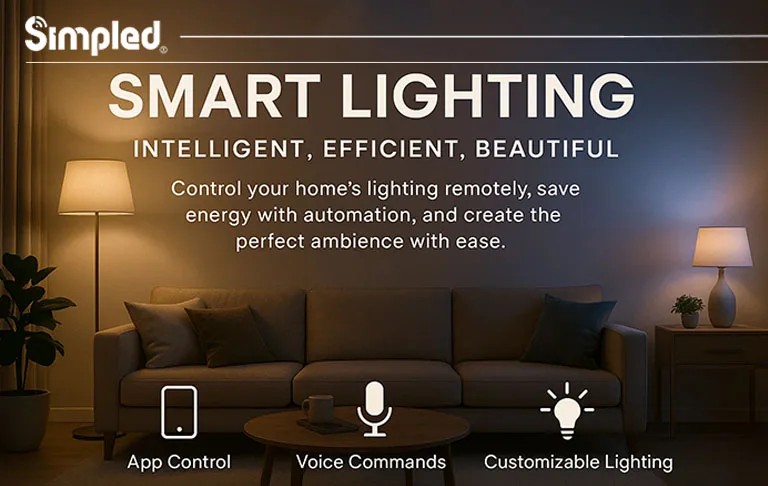
Lighting has always been one of the simplest ways to transform a space — from creating a cosy evening glow to brightening up your workspace. But with the rise of smart homes, lighting has evolved far beyond switches and dimmers.
Enter smart lighting — a modern, connected way to illuminate your home intelligently, efficiently, and beautifully.
In this guide, we’ll explore what smart lighting is, how it works, its real-world benefits, and how you can start using it in your own home today — whether you’re looking to save energy, improve convenience, or set the perfect ambience with a single voice command.
What Is Smart Lighting?
Smart lighting refers to lighting systems that can be controlled remotely via a smartphone app, voice command, or automation routines. Unlike traditional bulbs, smart lights connect to your Wi-Fi, Bluetooth, or a smart hub, allowing you to adjust brightness, colour, and timing without ever touching a wall switch.
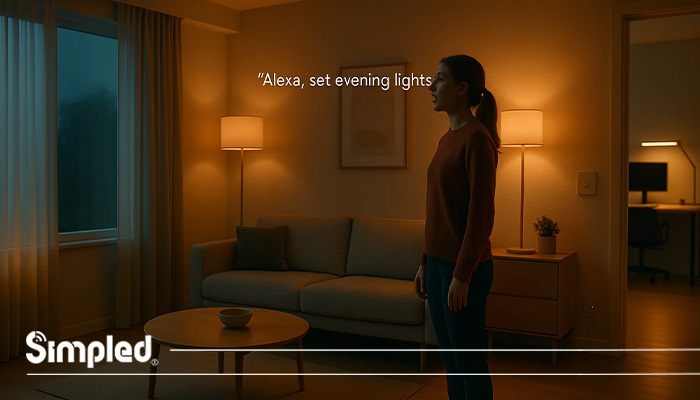
Imagine saying, “Alexa, turn on the living room lights,” or setting your lights to dim automatically when it’s movie time — that’s the power of smart lighting.
Common Features of Smart Lighting Systems
- Remote control via app (from anywhere in the world)
- Voice command compatibility (Alexa, Google Assistant, Siri)
- Adjustable brightness and colour temperature
- Scheduling and automation
- Energy monitoring and eco modes
Integration with motion sensors or smart door locks
how do smart lights work?
Although smart lighting may feel futuristic, the underlying technology is surprisingly straightforward. Smart lights work by combining LED lighting technology, wireless communication, and automation software to give users full control over their lighting environment.
1. Smart Bulbs Contain Built-In Microchips
Unlike traditional bulbs, smart bulbs include a tiny wireless microchip that allows them to communicate with other devices.
This chip enables the bulb to:
Receive commands from an app or smart hub
Adjust brightness or colour instantly
Send status updates back to your phone or automation system
In simple terms, each bulb becomes a small connected device — similar to a smart thermostat or camera.
2. Communication Through Wireless Protocols
Smart lighting systems rely on wireless technologies such as:
Wi-Fi
The most common connection method. Lights connect directly to your home network, allowing remote control from anywhere.
Bluetooth Low Energy (BLE)
Ideal for energy-efficient devices. BLE creates a direct local connection between your phone and the light.
Zigbee or Thread
Often used in larger smart home lighting systems. These technologies create a mesh network where devices communicate with each other to extend range and improve reliability.
For example, in a larger home, Zigbee lights in different rooms can relay signals between devices to ensure consistent performance.
3. Automation and Smart Scenes
Once your lights are connected, the real intelligence comes from automation routines.
You can program lighting behaviours such as:
Lights turning on automatically at sunset
Bedroom lights dimming gradually at night
Hallway lights activating when motion is detected
Outdoor lights switching on when the front door unlocks
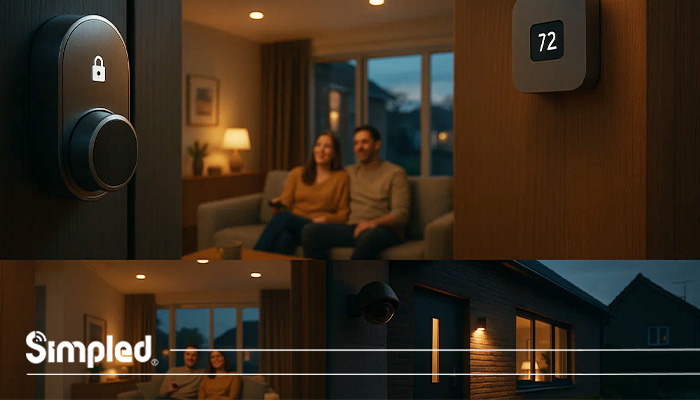
This is where smart home lighting becomes truly powerful. When integrated with devices like the Simpled SS Slim smart lock or SF Slim smart lock, your home can respond automatically to your presence.
For instance:
Unlocking the door after sunset could activate entrance lighting.
Locking the door at night could turn off interior lights automatically.
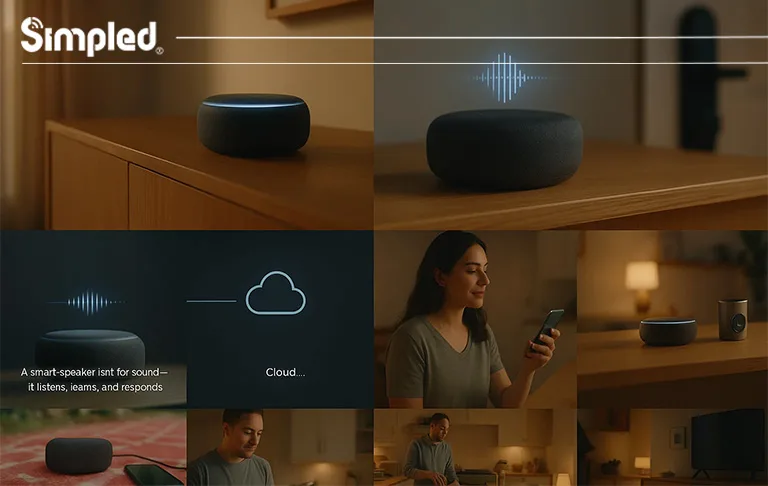
4. Voice Assistants Provide Hands-Free Control
Many smart lighting systems integrate with voice assistants such as:
Amazon Alexa
Google Assistant
Apple Siri
This allows simple voice commands like:
“Turn off the kitchen lights.”
“Dim the living room lights to 30%.”
“Set movie mode.”
For households with multiple smart devices, voice control simplifies daily routines and reduces the need for manual switches.
5. Cloud or Local Processing
Smart lighting systems can operate using:
Cloud-based control
Commands are sent through the internet via the manufacturer’s servers.
Local control
Commands operate directly within your home network for faster response and better privacy.
Modern smart homes often use a mix of both approaches, especially when integrating lighting with security devices such as smart locks, sensors, and cameras.
Smart Lighting Benefits
Smart lighting isn’t just a luxury — it’s an intelligent investment in comfort, safety, and efficiency. Here’s why it’s becoming a must-have for modern homes in the UK.
1. Convenience and Control
Forget fumbling for switches. With smart lighting, you can adjust lights using your voice or phone, even when you’re not home.
Whether you’re turning off the kitchen light from bed or setting up a “Good Morning” routine, it’s all about effortless control.
Example:
Set your bedside lamp to brighten gradually in the morning — a natural wake-up that feels far better than an alarm clock.
2. Energy Efficiency and Cost Savings
Smart lights are often LED-based, consuming up to 80% less energy than traditional bulbs. Add scheduling and motion detection, and you can drastically reduce wasted energy.
Pro Tip:
Use automation to turn off forgotten lights or dim brightness in the evening. Over a year, the savings can be significant — especially in multi-room homes.
3. Enhanced Home Security
Smart lighting also doubles as a security feature. You can schedule lights to turn on when you’re away, creating the impression that someone’s home.
Some systems even sync with smart door sensors or locks — for example, your outdoor light could turn on automatically when your Simpled Smart Lock detects you arriving home.
4. Mood and Ambience Customisation
From warm amber tones for relaxing evenings to bright white light for work, smart bulbs give you complete control over the atmosphere of any room.
Colour-changing options can match your mood or activity — whether it’s movie night or hosting friends.
Expert Tip:
Group your lights into “zones” — like Living Room, Kitchen, or Garden — to control them collectively and create beautiful light transitions.
5. Integration with Smart Home Ecosystems
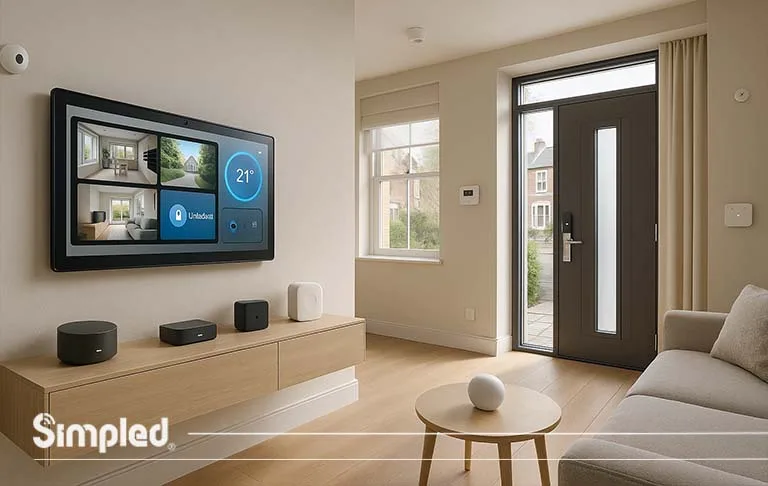
Smart lighting works best as part of a larger home automation system.
When combined with devices like smart locks, thermostats, and security cameras, your home becomes an interconnected, intelligent space.
For example:
- Lights dim when you start your evening movie.
- Outdoor lights turn on when you unlock your door.
How to Use Smart Lights Effectively
Getting the most out of smart lighting isn’t about fancy technology — it’s about setting up smart routines that match your lifestyle.
Step-by-Step Setup Guide
- Choose your lighting type — bulb, switch, or plug-in adapter. If you want to make the best choice, you can read the article on the best smart lighting system and consider the best lighting for your home and workplace.
- Install the bulb or device into your socket.
- Download the companion app (Simpled App, Alexa, Google Home, etc.).
- Connect to Wi-Fi or BLE.
- Name your lights (e.g., “Bedroom Lamp,” “Garden Light”).
- Create schedules or automation scenes.
Once configured, try linking your lights to your smart speaker for voice control.
Best Practices for Everyday Use
- Schedule lights to simulate natural sunlight in the morning.
- Automate outdoor lighting at dusk.
- Pair smart lights with sensors for hands-free convenience.
- Use energy reports to identify unnecessary power use.
Common Mistakes to Avoid
❌ Forgetting to label devices clearly — it causes confusion in automation.
❌ Mixing incompatible smart ecosystems (Alexa vs Apple HomeKit).
❌ Overcomplicating routines — start simple and build gradually.
❌ Ignoring firmware updates that improve security and stability.
Are Smart Lights Worth It?
- Smart lighting enhances your home’s comfort, energy efficiency, and style — all while reducing effort and waste.
For many UK homeowners, it’s the first step toward full home automation. - Whether you want a system that responds to your voice, follows your schedule, or syncs with your Simpled digital door locks and sensors, smart lighting brings control and elegance to everyday life.
Final Thoughts
Smart lighting is no longer futuristic — it’s practical, accessible, and increasingly essential for the connected home.
With the right setup, it helps you save energy, boost convenience, and personalize your space with just a tap or voice command.
At Simpled, we believe true innovation lies in making technology invisible but impactful — seamlessly integrating lighting, security, and connectivity into one smooth experience.
As smart lighting continues to evolve, it’s not just about illumination — it’s about living smarter, sustainably, and with style.
FAQ
- What is smart lighting?
Smart lighting allows you to control lights remotely using an app, smart hub, or voice assistant like Alexa or Google Home. - How does smart lighting work?
It uses Wi-Fi, Bluetooth, or Zigbee to connect your lights to your network, allowing control, scheduling, and automation. - How can I use smart lights?
You can use them for energy-saving schedules, mood lighting, or hands-free voice control with Alexa or Google Assistant. - Do smart lights save energy?
Yes — smart LEDs consume less power and can be scheduled to turn off automatically, reducing wasted energy - Can I integrate smart lighting with other devices?
Yes. Smart lights can work with smart locks, motion sensors, and security systems for a fully automated home.



Leave a Reply