
Over the past few years, smart home technology has shifted from novelty to necessity — and smart lighting is leading the way. From voice-controlled ambience to energy-saving automation, modern lighting systems now do far more than simply brighten a room.
As UK homeowners look for convenience, security, and style, the question arises: what are the best smart lights and smart lighting systems in the UK in 2026? This guide explores the top options, how they work, and what features make them stand out — so you can choose the right system for your smart home.
Why Choose Smart Lighting?
The benefits go far beyond convenience. A quality smart lighting system can:
- Save Energy: LED bulbs and intelligent dimming can reduce electricity use by up to 60%.
- Enhance Security: Set lights to simulate occupancy when you’re away.
- Boost Comfort: Adjust colour temperature to improve focus or relaxation.
- Integrate Seamlessly: Sync with your smart locks, cameras, or thermostats for a fully connected home.
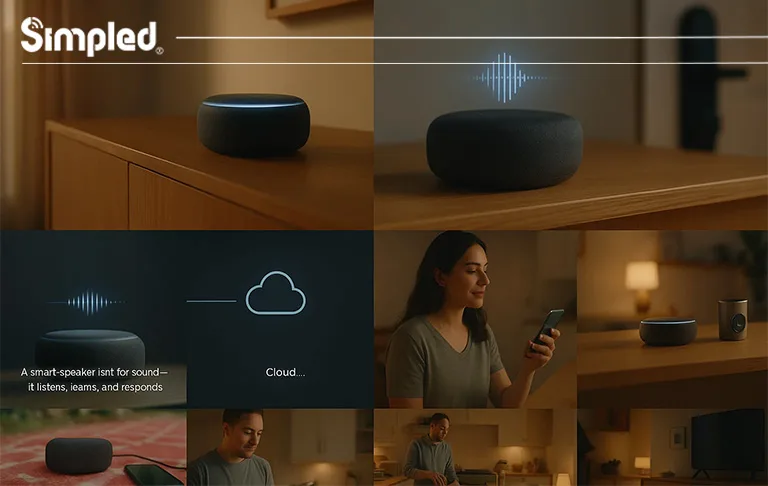
- Support Voice Control: Use Alexa, Google Assistant, or Siri for hands-free operation.
Pro Tip: When integrating with devices like smart locks or sensors, ensure compatibility across platforms (Matter or HomeKit support is a plus for 2026 systems).
Best Smart Lighting System UK (2026 Edition)
Smart lighting is the backbone of any connected home, offering a perfect blend of security, convenience, and energy tracking for UK households. With the rapid adoption of hub-free Wi-Fi options and next-generation Matter protocols, finding the right system depends entirely on your budget, existing smart ecosystem, and design preferences.
Below, we break down the absolute best smart lighting systems in the UK for 2026, starting with the industry’s most reliable all-rounder.
Philips Hue — Best Overall Ecosystem
Philips Hue remains a household name for good reason. It offers unmatched versatility with bulbs, light strips, motion sensors, and wall switches — all controlled through the Hue Bridge or Bluetooth.
Key Features:
- Huge range of bulb types (E27, GU10, B22, etc.)
- Reliable Zigbee connectivity with optional Matter integration
- Adaptive brightness and colour scenes
- Works with Alexa, Google, and Apple Home
- Best For: Homeowners who want a reliable, expandable lighting ecosystem.
Nanoleaf (Matter/thread support) — Best for Creative Design
Nanoleaf lights are more than functional — they’re artistic. Modular panels can be arranged in any shape, transforming your wall into a living light sculpture.
Highlights:
- Touch-sensitive and music-reactive
- Works with Apple Home, Alexa, and Google
- Supports Thread and Matter
- Excellent for gaming setups or modern interiors
Best For: Aesthetic lovers and gamers seeking ambience.
Nanoleaf lights will respond to a user’s actions, will have higher levels of brightness (up to 1,100 lumens) than most products on the market today, and can be controlled across multiple platforms without conflict.
These wouldn’t be described as native to HomeKit, but they are ideal for users who want to use more than one product from different manufacturers together. More advanced Matter and Thread support make them great at working with other ecosystems.
LIFX — Best Wi-Fi Lighting System
LIFX bulbs connect directly to Wi-Fi, removing the need for a hub. Their colour accuracy and brightness are among the best on the market.
Highlights:
- No hub required
- Vibrant colour range (over 16 million shades)
- Excellent app control and effects
- Integrates with Alexa, Google, and SmartThings
Best For: Renters or small flats where simplicity and Wi-Fi control matter
A large number of colours and whites. Lifx bulbs provide a tremendous selection of colours and whites to mix and match.
You can create ambient lighting in nearly every colour imaginable, as each bulb can create 550 billion potential colours. Who should buy:
- Anyone who wants very bright, high-quality lighting in their living room, office, or to provide security at home.
- Anyone who wants very high-quality lighting without the hassle of having to use a hub to control their light.
- Anyone who is interested in creating an immersive experience in their home theatre or for feature lighting.
Tapo Smart Lighting by TP-Link — Best Budget Option
Tapo is the go-to for affordable yet reliable smart lighting. The Tapo L530B and L630 models offer scheduling, colour control, and energy tracking — perfect for first-time users.
Highlights:
- Budget-friendly price
- Easy setup via Wi-Fi
- Works with Alexa and Google
- Energy monitoring features
Best For: Entry-level users who want smart control without high cost.
Govee — Best for Dynamic Ambience
Govee’s LED strips and bulbs are known for vibrant effects and smooth app control, ideal for entertainment zones.
Highlights:
- Syncs with music or on-screen visuals
- Wi-Fi and Bluetooth connectivity
- Dedicated app with scene presets
- RGBIC technology for gradient effects
Best For: Movie lovers and content creators wanting a dynamic experience.
best smart bulbs uk (2026)
The smart-lighting market within the UK is rapidly growing and presents excellent offerings for homeowners in 2026 that include: low-priced bulbs through to high-end, full-ecosystem systems.
If your main concern is price, brightness, decorative appearance or smart home compatibility, there will be a smart bulb for your needs. The advancements made in Matter & Thread standard technologies now provide a solid foundation for building a reliable and universally compatible future-ready smart home, as well as offering connectivity across multiple platforms, including Apple HomeKit, Google Home and Amazon Alexa.
Standard Bulbs (B22, E27, E14)
They have the advantage of being low-cost, widely available and are an ideal choice for everyday indoor lighting (everyday uses).
Smart bulbs come with the basic features associated with a smart bulb, i.e. dimmable, tunable whites and limited colour options.
Spotlights (GU10)
The GU10 spotlight is a common choice of smart lighting for targeted lighting around the home and office in the UK. Its small size and ability to direct light mean that it can be used in kitchens, living rooms, hallways and for accent lighting.
- Dimmable: Some GU10 smart bulbs will need to have the correct dimmer compatible with their use, or a smartphone app to dim their brightness steadily.
- Installation: GU10 light bulbs fit into the standard GU10 base in a light fitting; however, some GU10 light bulbs will work on a retrofit basis, while others will need a minor adjustment to fit into a recessed light fitting correctly.
Philips Hue
An established, robust product ecosystem: bulbs, strips, floodlights, outdoor lights and decorative lighting.
Robust application features include creating dynamic scenes and curated colour themes.
Requires a hub to use (Hue Bridge or Hue Bridge Pro) to allow stability with Zigbee wireless protocols, establish presence detection, and interoperability with Matter. Best Customers:
- Someone who values high-quality light, natural colours, and depth within an ecosystem.
- Someone who plans on making long-term investments in smart home technology.
High-end Premium
Philips Hue is often viewed as the best brand because of its natural light and extremely stable systems. Quality at a level far beyond that of other brands, and with an unmatched product range.
Hue Bridge Compatible
The Hue Bridge provides additional capabilities, including Zigbee link support, sensing presence in the room and making sure that customers will be able to enjoy Matter compatibility in the future.
Smart automation available when using the Hue Bridge to provide the advanced features.
TP-Link Tapo
Many people relying on these bulbs for lighting want an affordable solution with all of the features a traditional light bulb has. Tapo bulbs are bright with high output, provide solid connectivity to a smartphone app to give you everything you want in one package, without needing to invest in a costly hub.
Tapo’s bulbs, such as the Tapo L535E, produce up to 1,100 Lumens, making them perfect for placement in places such as your living room, kitchen and utility areas. They also feature tunable white light at 2700k-6500K allowing you to create a warm ambient type of lighting for relaxing or to have bright, focused lighting for working or reading.
L535 (best Overall)
Compatible with Alexa and Google Home using voice commands to control Tapo smart bulbs. Other Tapo bulbs provide affordable smart lighting that can be controlled via App control, scheduling and energy monitoring.
Excellent for providing multiple rooms with smart lighting, while not exceeding your budget. The best customers are anyone looking for high-output smart lighting with exceptional colour flexibility, but at a very affordable price.
If you want an easy-to-set-up smart lighting product that doesn’t require a hub and one that has a consistent performance level, Tapo would be the right choice. It is ideal for providing excellent all-around smart LED lighting and for those on a budget.
- Highly Bright
- Affordable
- Very Feature-Rich
Affordable and Feature Rich
Perfect for general smart lighting without having to pay high-end prices. Users looking for bulbs that will work throughout their home understand how affordable Tapo bulbs are, making them a great value for those wanting to utilise multiple rooms while minimising their overall cost of purchasing a light fixture.
Even users who select entry‐level bulbs will have the features typically only found in premium-priced bulbs (such as scheduling, timers, energy monitoring or remote access through the Tapo app). Ecosystem integration and connectivity:
- Hub‐Free Setup: Tapo bulbs operate without requiring the addition of a bridge or hub to connect to your home/office’s 2.4GHz Wi‐Fi network.
- Target Market Segment: The Tapo line of products are designed for consumers who want an affordable solution that produces high-quality, high-brightness lighting, but do not want to invest in expensive ecosystems like the Philips Hue ecosystem.
Tapo product offerings have a significant advantage with consumers looking for low-priced, reliable, easy-to-install bulbs primarily to light their home (rather than consumers looking for multi-zone colored bulbs or advanced scene control).
Govee
Govee smart bulbs and accessories are easily recognisable in the UK market as affordable, colourful lights with interactive smart features that provide fun, flexible, and interactive lighting options without being as expensive as the high-end branded products available on the market.
Budget Colour Options
Budget-friendly RGB lights designed specifically for a room or entertainment space. Some Govee bulbs have a feature whereby their light reacts to music and thus provides a complete entertainment experience.
Such a feature is quite common when setting up for a gaming experience, party or media room and enhances the ambience without necessarily needing any extra equipment. Using the Govee Home app, users may easily set up customised light scenes, automated light timings, or pre-set moods and colour cycle settings.
The segmented colour functionality of certain Govee bulbs provides more than one colour on the same strip or bulb, thus improving their decorative capabilities.
- Lower Starting Price: Govee makes it easy for people not to break the bank when seeking multi-coloured lights. This makes it ideal for users new to the concept of smart homes.
Dynamic Senses
Music synchronisation and multi-sectional control for total immersion when using both effects together. Govee’s more advanced lines of bulbs now include capabilities for music sync, or automation of scenes automatically through sensory events like sound, through a schedule or through an app event, and having their motion sensors and environment response systems allow for smart interactions without requiring a separate hub.
Some of Govee’s speciality light types (i.e., LED Strip Lights, Mini Panel Lights, etc.) provide the ability to have each segment of the lighting be controlled separately to provide the user with truly immersive environments in gaming setups, home theatres or decorative displays.
Prime examples of accent lighting, setups for parties, and customising the atmosphere. Ideal Users:
- Budget-conscious individuals who are looking to create a great-performing Smart Lighting System
- People who want dynamic or interactive lighting experiences without spending a lot of money on premium ecosystems.
Amazon basics (value choice)
No-frills light bulbs intended for everyday illumination; excellent value. An entry-level smart bulb that is cost-effective, functional and designed for first-time buyers looking for a reliable and low-cost product in the UK. Special features:
- Cost: Priced at under £15; Suitable for filling multiple rooms with bulbs at a relatively low total cost.
- Smart Functionality: Offers all the standard ‘smart functions’ including: App control; scheduling; Brightness control; Basic (RGB) colour.
- Operation: Wi-Fi connection; works with Amazon Alexa for voice control; No Hub required.
User Type
- First-time smart bulb users who want a budget-friendly product.
- Home Dwellers who want basic smart lighting without an ecosystem (other products).
- Excellent for bedrooms, kitchens, or guest suites where basic control and automation would be sufficient for their needs.
Nanoleaf (Matter/thread support)
These Nanoleaf Essentials are compatible with Matter so that they can work with other manufacturers’ smart homes, will respond to a user’s actions, will have higher levels of brightness (up to 1,100 lumens) than most products on the market today, and can be controlled across multiple platforms without conflict.
These wouldn’t be described as native to HomeKit, but they are ideal for users who want to use more than one product from different manufacturers together. More advanced Matter and Thread support make them great at working with other ecosystems.
Lifx (high brightness)
High-bright options suitable for use as a deterrent against thieves or in large areas needing significant illumination. A large number of colours and whites. Lifx bulbs provide a tremendous selection of colours and whites to mix and match.
You can create ambient lighting in nearly every colour imaginable, as each bulb can create 550 billion potential colours. Who should buy:
- Anyone who wants very bright, high-quality lighting in their living room, office, or to provide security at home.
- Anyone who wants very high-quality lighting without the hassle of having to use a hub to control their light.
- Anyone who is interested in creating an immersive experience in their home theatre or for feature lighting.
Wyze (great value)
Inexpensive functional smart bulbs cater to consumers on a limited budget who want to put their money towards an essential household item. Wyze is known for creating some of the best smart bulbs on the market today.
They provide a very high-quality bulb at a low price while being very easy to use and very feature-rich for the average UK consumer.
- Affordable RGB options: Wyze is able to provide a large variety of colour options at a low price, providing numerous opportunities for multi-room installations.
- Hub Free Connectivity: Connects to existing Wi-Fi, therefore eliminating the need for additional hardware.
- Energy Saving: Lasts approximately 20,000-25,000 hours, reducing the frequency and cost of replacement.
Targeted customers are the budget-conscious customer who wants reliable smart lighting, and the customer who wants to have both App and voice control of their lights without having a complicated setup. Perfect for rooms where cost, ease of setup, and basic smart function are top priorities.
Light Bars
Smart light bars are used to create accent lighting in a space, task lighting, or create architectural effects in both a rigid and semi-rigid format. These types of lights can be mounted on walls, ceilings or behind a display, creating ambient light within the space.
- Versatility of use: Light bars can be used for providing TV bias lighting, under shelving, display cases or under cabinets.
- Colours and effects: Most light bars offer RGB and tunable white; premium lights also allow multiple colour gradients along the light bars.
- Smart control: Smart light bars can be controlled through an app, voice commands and integration with third-party systems (including Matter), and can also be used in conjunction with other devices to create automated settings.
- Segmented Lighting: Some higher-end models, such as the Nanoleaf Essentials or the Govee Envisual bars, have the capability of being controlled section by section, allowing the user to create truly unique effects.
- Installation: Some light bars are designed to mount to walls using wall mounts, magnetic mounts, or have adhesive backing.
All-Around & Budget
The All-Around & Budget bulbs give a customer some good value by providing high-quality functionality and smart technology at an affordable price. They give a user more options for everyday use, while not costing extra money for advanced technology. Ideal for those who are new to smart home technologies or who want to furnish more than one room at a low cost.
- High Value: Cost between £10 and £15, with RGB and tunable white light.
- Quick Set UP: Generally have Wi-Fi and App control with some options allowing for Matter to become a part of their connectivity.
- Versatility: Great for general use, task, or ambient lighting.
Considerations:
- Lumens: While they work great for general purposes, they do not provide the same level of light production as higher-end bulbs would provide for task lighting.
- Connectivity: Common for bulbs to work without a hub; however, it is beneficial to purchase bulbs that are listed on the manufacturer’s website to guarantee the app will work with the selected light bulb.
- Feature Limitations: Compared to higher-end smart ecosystems, budget and all-around bulbs lack the ability to provide advanced automation and multiple devices working together.
Wiz LED Smart Bulb (colour)
The Wiz LED smart bulb is great for general use around the house and therefore represents good value. It does not require a separate hub or device to function. An inexpensive RGB bulb has easy app control and works with Alexa and Google.
Govee Wi-Fi LED Bulb
The Govee Wi-Fi LED Bulb (L20) offers a variety of colours that respond to music or move according to its own pattern. In addition to its price point, the Govee Wi-Fi LED Bulb also requires you to be on a solid Wi-Fi network, but it will work with both Amazon Alexa and Google Assistant. Budget bulbs that provide the user with multiple colour options and entertainment modes.
Amazon Basics Smart A60
Simple, reliable bulbs with app or voice control and a value choice. The Amazon Basics Smart A60 is a cost-efficient smart lightbulb that gives UK users the performance of essential light controls without the price of high-end luxury light bulbs.
They can be used all over the house (bedrooms and living rooms, or home office) while providing simple usage, reliability, and functionality at an affordable price. The Amazon Basics Smart A60 should be considered a value option for customers who want to try out smart lights for the first time or for customers who need to furnish multiple rooms at a reasonable price and do not want to set up complicated systems. Some key features of the A60 include:
- Simplicity: Set up with the Amazon Alexa app, and without a hub.
- Voice Control: Works easily with Alexa and has basic integration with Google Home.
Some Considerations for the A60 are:
- Ecosystem: Best suited for users who are already Amazon Echo customers, and limited for cross-platform automation options.
Tapo L535E (High Brightness)
1,100 Lumens (high output) with RGB and White tunable options, and one of the most cost-effective smart bulbs available, plus it is Matter-ready.
- High Brightness: Generates a whopping 1,100 lumens of light output; this is the highest lumen output among low-cost smart bulbs.
- Colour And Tunable White: Offers RGB colours; as well provides white light output at 2,700K up to 6,500K; they can be configured for use in ambient or task lighting settings.
Premium & Ecosystems
The best type of ecosystem to choose is premium if you want to create an environment that has rich and natural lighting, and you plan on adding smart home devices as you progress.
- Central Control: Single point of control for all devices & allows you to have one app that controls everything in your home.
- Automation Across the Entire Home: Allows you to automate any room or device to work with each other, using motion sensing and presence detection.
- Future Proof: With Matter and other smart home standards, you know your system will last.
Philips Hue White and Colour
Philips Hue continues to be the Number 1 choice for premium smart lighting systems, because of their ecosystem maturity and the number of different types of products.
- Hue App: The Hue App provides the user with an elite interface that includes dynamic scenes and curated colour themes for easily creating mood lighting.
- Bridge Integration: You will need either the Hue Bridge or Pro Bridge to fully utilise the Hue, and provide Zigbee’s stability, presence sensing ability and a future-proof connection to Matter.
- Performance & Ecosystem: Philips Hue is known as one of the best for producing a natural, immersive experience with both whites and colours, including RGB.
- Brightness and Colour: Extraordinary whites and RGB colours will deliver a naturally immersive experience.
- Advanced Sensing Technology: Allows for the detection of activity in a room regardless of the number of bulbs being used and without the need for traditional motion sensors.
- Investment Opportunity: Wiz provides entry-level, inexpensive options, while each Hue White and Colour bulb sells for roughly £65 ($45) and starter kits for over $240. Users who value lighting quality and a robust ecosystem over pricing will benefit from purchasing these products.
Nanoleaf Matter Essentials
The central philosophy behind Nanoleaf Matter Essentials is universal interoperability through connecting the different ecosystems and allowing customers to take advantage of those connections without being locked into one vendor.
- Apple HomeKit Considerations: You must have a Home hub, such as a HomePod or Apple TV, for additional features, including Adaptive Lighting.
- Connectivity: Thread and Wi-Fi are the two communication protocols used, which provide added stability and speed on any modern smart network.
- Target Market: Users who are seeking interoperability in smart home devices. High performance while not being locked into a particular ecosystem.
AiDot Linked Matter Bulb
This AiDot Linkind light bulb delivers a hub-less Matter-enabled smart light bulb that has 16 million colours, syncs to your music, monitors energy usage, and is at a lower price compared to higher-end products like Philips Hue, perfect for users who want to integrate different smart light systems without requiring a separate hub for each product.
Speciality and Form Factors
Speciality light bulbs exist for unique use-cases such as decoration, ambience and architectural lighting.
- BR30 Floodlight: Great for recessed ceiling cans and large indoor applications. The GE Cync Dynamic Effects BR30 allows four separate quadrants of colour and music to be synced.
- Smart Ambient Lamp: About ambience and design, Ikea’s Varmblixt lamp is a doughnut-shaped glass lamp that provides a comfortable ambient light.
Benefits
- Enhancing Mood and Ambience with Dynamic Lighting Scenes
- Providing Targeted Light in Unlit Areas
- Integrating Voice Assistants and Applications to Create Flexible Control Options
GE Cync Dynamic Effects (Floodlight)
The BR30 floodlight has customizable colours across 4 quadrants for the perfect ambience for all types of events, such as parties or movie nights.
IKEA Varmblixt (Smart Lamp)
Varmblixt is a stylish decorative lamp with a centre core design made of clear glass. It projects 180 lumens of light output, which creates warm ambient light; however, it requires an additional Matter-enabled hub device to fully work as a smart device with the Apple Home, Google Home, or Amazon Alexa smart ecosystems.
Govee LED Strip Light
Perfect for accent or immersive lighting solutions, Govee’s LED Strip Lights provide segmented colour control across different segments (i.e., 1 strip can have different colored lamps in each segment), offer multiple pre-built scenes, and can synchronise with music.\
Govee LED Strip Lights can be up to 100 feet in length and connect hub-free using either Wi-Fi or Thread.
Pure Smart A19F (Filament)
Designed for customers who care about artistic design aesthetics, Pure’s A19F filament bulb provides beautiful style and unique connectivity options for interactive smart home use.
Outdoor and Security
The combination of exterior smart bulbs to provide light and security with an actuating high-powered (1,100) lumens weatherproof light source is integrated within a smart home ecosystem of products consisting of exterior lighting.
This technology can be utilised to deter potential intruders, simulate occupancy, and automate exterior lighting.
Lifx Colour BR30 (weatherproof)
Lifx Colour BR30 Offering 1,100 lumens, IP65 weather resistance, and full compatibility with smart platforms such as Alexa, Google Assistant or Siri, this outdoor light is designed as one of the highest-performing bulbs within Lifx’s offering.
It offers the ability to experience complex high, low, bright and dark coloured advanced white light at the same time, and also works as part of an occupancy simulation; thus providing high levels of security.
Ring Pathlight Solar
This outdoor safety light is powered by solar energy and will provide motion-activated lighting to your Pathlight or Ring Camera, and provides synchronised group lighting amongst multiple lights.
Ring Pathlights are the perfect product, designed for homeowners who are looking for a low-cost investment that will help keep their homes and families safe.
Govee Lynx Dream (String Lights)
These outdoor string lights are designed for a festive or aesthetic use, and offer weatherproofing, the ability to synchronise music with lights, and extremely extensive scene creation capabilities.
Govee’s outdoor string lights have been designed for basic occupancy simulation routines but are primarily at the ambient level. Versatile; work indoors and out; 520 light beads on 20 strands, perfect for festive or decorative display. Key benefits:
- Automated Security: Ability to automate detection and response to motion; simulate occupancy; and integrate with camera systems.
- Durability: All lighting products listed have an IP rating that confirms durability under adverse weather conditions, ensuring functionality 12 months a year.
- Ease of Use: Most of the items listed are no hub or compatible with a smart home ecosystem, meaning remote management of the device will be easily accomplished.
Ideal Customer:
- Home owner who wants to create a safe or automated outdoor lighting experience.
How to Choose the Best Smart Lighting System for Your Home
When deciding which lighting system fits your lifestyle, consider these factors:
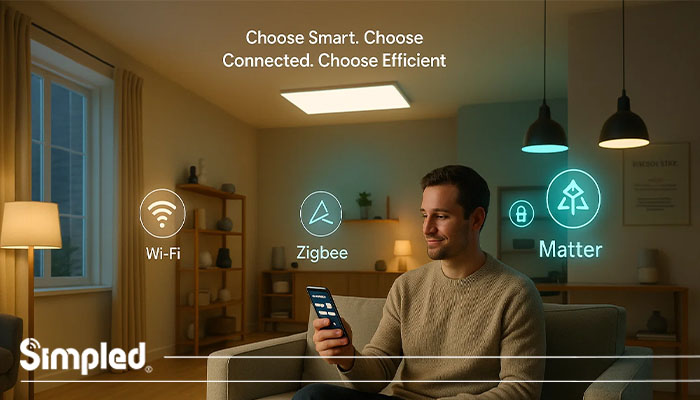
Connectivity
- Wi-Fi: Direct control via app, no hub needed (LIFX, Tapo).
- Zigbee/Thread: More reliable for large homes (Philips Hue, Nanoleaf).
- Matter Compatibility: Future-proof choice ensuring interoperability across brands.
Compatibility
Ensure your lighting system integrates with your existing smart home setup — whether you use Alexa, Google Home, or Apple HomeKit.
Features You’ll Actually Use
Some systems focus on vibrant RGB effects; others emphasise warm, natural tones. Choose one that fits your priorities — ambience, security, or automation.
Installation and Setup
Smart bulbs simply replace existing ones, but integrated light switches or panels might require minor electrical work.
Tip: For UK homes, always ensure the installation follows BS 7671 wiring regulations.
Energy Efficiency
Opt for LED-based systems with energy certifications like Energy Star or CE marking, which guarantee lower electricity bills and safer operation.
Smart Lighting Integration: Going Beyond Bulbs
Lighting can do more when it’s part of a connected ecosystem.
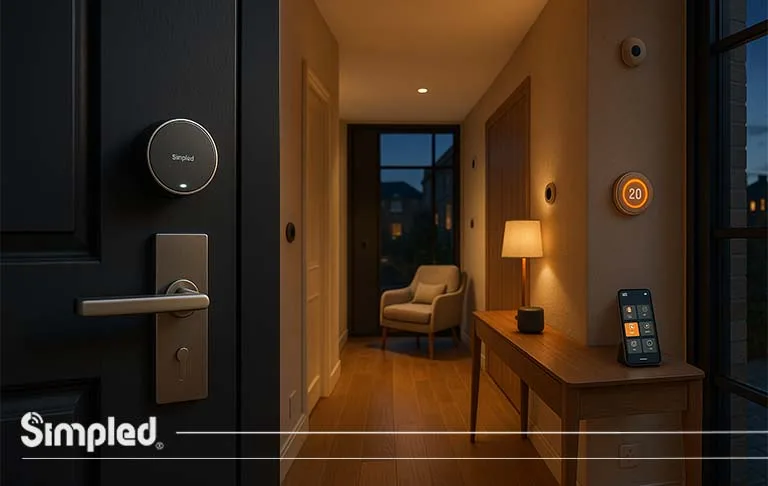
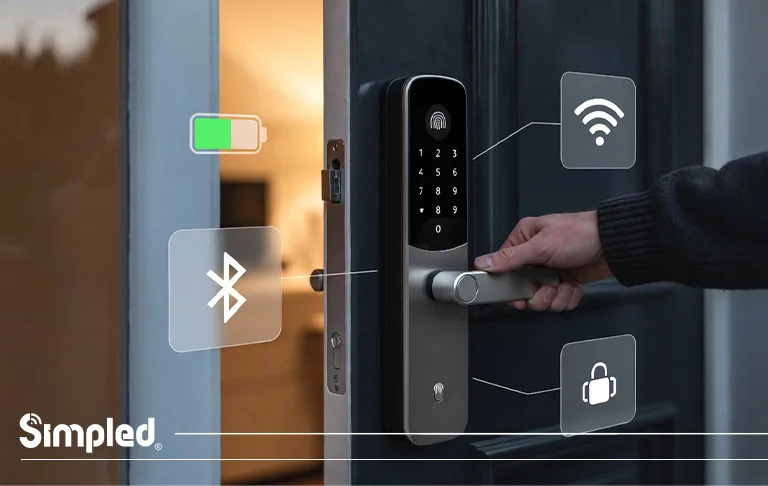
For example, imagine pairing your smart lighting with a Simpled smart lock — your hallway lights turn on automatically when you unlock the door, creating a seamless welcome experience.
Other integrations include:
- Motion Sensors: Lights activate when movement is detected.
- Smart Plugs: Sync non-smart lamps with automation schedules.
- Security Systems: Flash lights to alert you of unusual activity.
Common Smart Lighting Mistakes to Avoid
- Ignoring Compatibility: Mixing incompatible brands can cause connectivity issues.
- Overloading Wi-Fi: Too many devices can slow down your network.
- Skipping Firmware Updates: These often fix bugs and improve security.
- Poor Placement: Lights that are too close to routers or metal fixtures may suffer interference.
- No Backup Control: Always install physical switches or voice options in case your app or Wi-Fi fails.
Expert Tips for Setting Up Smart Lighting
- Start Small: Begin with one room, then expand once you find your preferred brand.
- Use Routines: Automate wake-up or bedtime lighting scenes.
- Link Sensors: Combine lighting with motion sensors for hands-free convenience.
- Schedule by Season: Adjust brightness and timing based on daylight hours.
- Combine with Smart Locks: Create “Welcome Home” and “Goodnight” routines with lighting and door automation.
Conclusion: Light Your Way to a Smarter Home
- Smart lighting is no longer futuristic — it’s an essential part of modern living. Whether you want a budget-friendly starter kit or a full-home connected system, today’s options offer something for everyone.
- From Philips Hue’s reliability to Nanoleaf’s artistic flair, each system brings unique value. The best smart lighting system in the UK is the one that fits your lifestyle, design preferences, and connected devices — especially when paired with innovations like Simpled’s smart locks for an effortless, intelligent home experience.
FAQ
- What is the best smart lighting system in the UK right now?
Philips Hue is widely considered the best overall smart lighting system in the UK for 2026, thanks to its reliability, wide range of bulbs, and seamless integration with all major smart home platforms. - Do I need a hub for smart lighting?
Not always. Some systems like LIFX or TP-Link Tapo connect directly to Wi-Fi, while others such as Philips Hue or Nanoleaf use a hub or bridge for stronger connectivity and expanded features - Are smart lights compatible with Alexa or Google Home?
Yes. Most leading smart lighting systems, including Hue, LIFX, and Tapo, work with Alexa, Google Home, and Apple HomeKit for easy voice control and automation. - How can I save energy with smart lighting?
Use LED smart bulbs, set schedules, and enable motion or daylight sensors. These features automatically adjust lighting, helping you cut electricity use and reduce costs. - Can I integrate smart lighting with other smart home devices?
Absolutely. Smart lighting can connect with smart locks, cameras, and thermostats — creating routines like turning lights on when you unlock the door or dimming them when you start a movie.



Leave a Reply