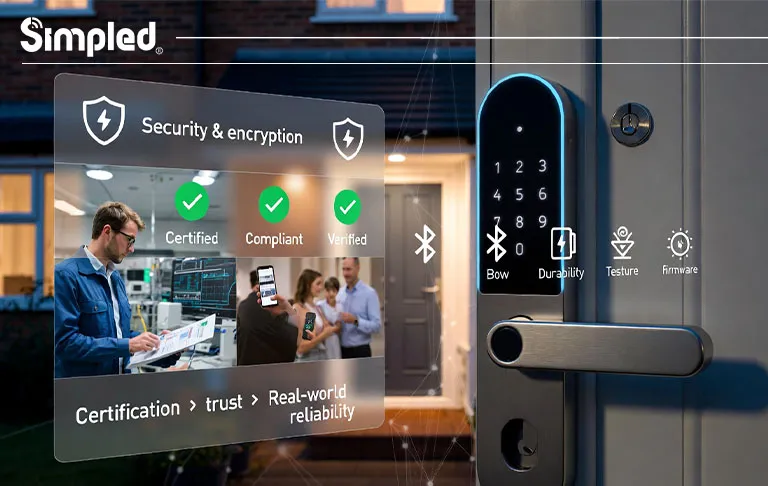
The Internet of Things has quietly woven itself into everyday life. From smart locks and security cameras to thermostats and access control systems, connected devices now sit at the heart of our homes and businesses. But as IoT adoption grows, so does an important question:
How do we know these devices are safe, reliable, and compliant?
That’s where IoT device certification comes in.
IoT certification isn’t just a box-ticking exercise for manufacturers. It’s a trust signal for users, a compliance requirement for regulators, and a critical safeguard against security vulnerabilities. In this guide, we’ll break down what IoT device certification really means, why an IoT certificate matters, and how certified devices—like Simpled smart locks—set a higher standard for security and durability.
What Is IoT Device Certification?
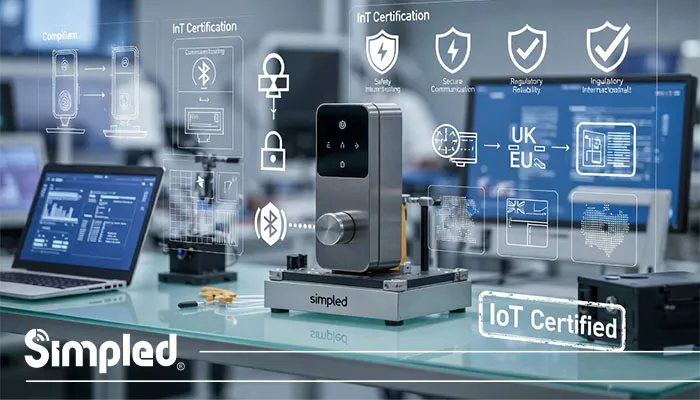
IoT device certification is the formal process of testing and validating a connected device against recognised technical, safety, security, and regulatory standards before it reaches the market.
In simple terms, certification answers three essential questions:
Is the device safe to use?
Does it communicate securely?
Does it comply with local and international regulations?
An IoT device that passes these checks is issued an IoT certificate, confirming that it meets specific requirements set by regulatory bodies, industry alliances, or standards organisations.
IoT Certification vs Internal Testing
Many manufacturers perform internal testing—but that alone isn’t enough. Certification requires independent verification by accredited labs or authorities, ensuring impartial and standardised evaluation.
At Simpled, internal testing is only the first layer. Certification adds the external validation that customers, partners, and regulators rely on.
Why IoT Device Certification Matters More Than Ever
1. Security Is No Longer Optional
Every connected device is a potential entry point for cyber threats. Uncertified IoT products often lack proper encryption, secure firmware updates, or access control safeguards.
Certified devices must demonstrate:
Secure communication protocols
Encrypted data storage and transmission
Protection against common attack vectors
For smart locks, this is non-negotiable. A vulnerability isn’t just digital—it’s physical.
2. Regulatory Compliance in the UK and Beyond
Different regions impose different requirements on IoT devices. In the UK and EU, compliance often involves:
Radio and electromagnetic standards
Electrical safety requirements
Data protection considerations
Without proper IoT certification, devices may be blocked from sale or recalled later—costly for brands and frustrating for users.
3. Trust, Longevity, and Brand Credibility
Customers may not read certification documents, but they feel the difference. Certified devices:
Work more reliably
Last longer
Integrate more smoothly with other systems
This is why professional installers, landlords, and commercial clients increasingly demand certified IoT products only.
Common Types of IoT Certificates Explained
Not all IoT certificates serve the same purpose. Depending on the device, multiple certifications may be required.
Regulatory IoT Certification
These ensure legal compliance within specific markets:
Radio frequency and wireless communication approval
Electrical and product safety standards
Without these, a device cannot legally be sold in many regions.
Security and Cyber IoT Certification
Focused on digital resilience, these certifications assess:
Encryption standards
Secure boot and firmware updates
Authentication and access control
For smart access devices like locks, this layer is critical to prevent both hacking and unauthorised entry.
Interoperability and Ecosystem Certification
Some IoT certificates verify compatibility with wider ecosystems such as smart home platforms. These ensure smoother integration and fewer connection failures over time.
At Simpled, certification is treated as a foundation—not a marketing badge—ensuring long-term compatibility as platforms evolve.
How the IoT Device Certification Process Works
While exact steps vary by certification body, the process usually follows a clear structure.
Step 1: Pre-Compliance Design Review
Before testing begins, device architecture is reviewed:
Hardware components
Wireless modules
Firmware structure
Expert tip: Designing for certification from day one saves time and cost later.
Step 2: Laboratory Testing
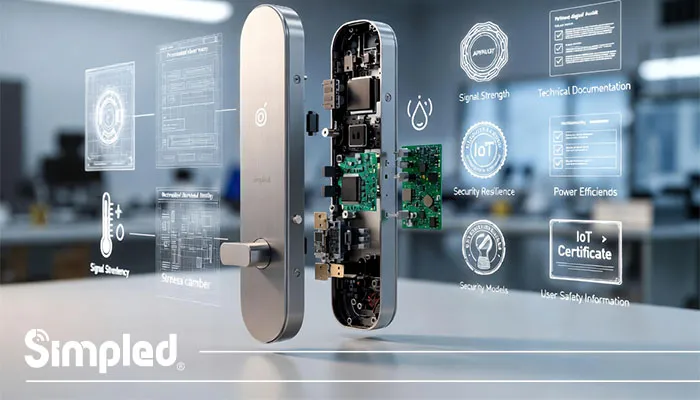
Certified labs test devices for:
Signal strength and interference
Power efficiency
Environmental durability
Security resilience
For physical IoT products like smart locks, mechanical durability is also evaluated—something Simpled prioritises with robust metal construction.
Step 3: Documentation and Audit
Manufacturers must submit:
Technical documentation
Security models
User safety information
Incomplete documentation is one of the most common reasons certification is delayed.
Step 4: Issuance of the IoT Certificate
Once all requirements are met, an official IoT certificate is issued, allowing the product to be legally sold and deployed.
Common Mistakes to Avoid with IoT Certification
Even experienced manufacturers can stumble. Here are frequent pitfalls:
Treating certification as an afterthought
Using uncertified wireless modules
Ignoring firmware update requirements
Failing to plan for future regulatory changes
Best practice: Choose partners and components that already align with recognised standards.
UK-Specific Considerations for IoT Certification
In the UK market, IoT devices—especially security products—are under increasing scrutiny. Buyers expect:
Clear compliance documentation
Long-term software support
Proven durability
This is particularly important for landlords, Airbnb hosts, and commercial properties, where uncertified devices can become liabilities.
Simpled designs its smart locks with these expectations in mind, ensuring readiness for both residential and professional environments.
How IoT Certification Impacts Smart Locks in Real Life
Consider two smart locks:
One uncertified, cheaper, and faster to launch
One certified, tested, and built for longevity
The uncertified lock may work initially—but over time, users face connection issues, battery inefficiency, or security concerns. The certified lock continues operating reliably, even years later.
This difference becomes obvious in high-use scenarios like rental properties, offices, or family homes.
Simpled’s Perspective on IoT Device Certification
At Simpled, IoT certification isn’t treated as a final hurdle—it’s part of the design philosophy.
Our approach focuses on:
Security-first architecture
Durable, all-metal hardware
Low-energy Bluetooth connectivity
Long battery life backed by testing
Certification validates these choices, ensuring our digital door lock meet both current standards and future expectations.
Final Thoughts: Is IoT Device Certification Worth It?
Absolutely.
For users, IoT certification means peace of mind.
For businesses, it means compliance and scalability.
For manufacturers, it signals responsibility and quality.
As IoT continues shaping how we live and secure our spaces, certified devices will become the baseline—not the exception.
Choosing certified products today is an investment in safety, reliability, and trust tomorrow.




Leave a Reply