
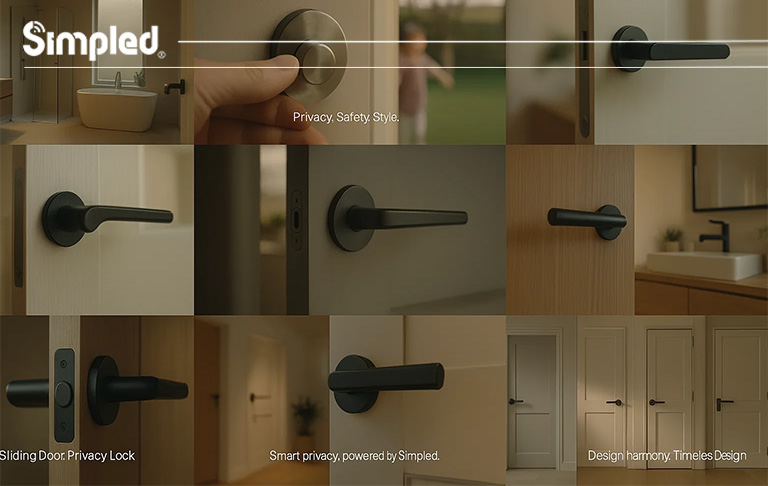
Your bathroom should feel like a private sanctuary — a space where you can unwind without worrying about someone accidentally walking in. Yet, many homeowners overlook one small but crucial detail that ensures this privacy: the bathroom door lock.
Choosing the right lock for your bathroom isn’t just about privacy; it’s about style, safety, and practicality. Whether you’re renovating your home, updating your fixtures, or designing a modern smart home, the lock you choose can make a noticeable difference.
This guide explores the different types of door locks for bathroom , how they work, where they’re best used, and what modern innovations — like digital door locks — are redefining bathroom security and convenience in UK homes.
Why Bathroom Door Locks Matter
While most interior doors focus on aesthetics, bathroom doors must also prioritise privacy and moisture resistance. The right lock:
Ensures privacy for everyone using the bathroom.
Prevents accidental lock-ins (especially for children or the elderly).
Matches the bathroom’s style — from traditional to contemporary.
Stands up to humidity and temperature fluctuations.
In UK homes, bathroom locks often combine discreet design with reliable performance, offering both form and function.
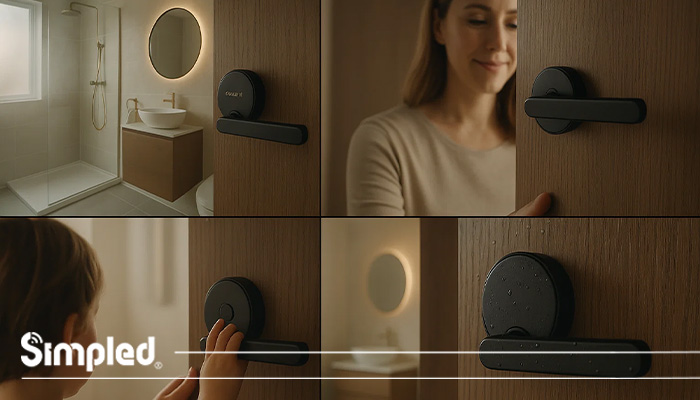
Main Types of Locks for Bathroom Doors
Let’s explore the most common and practical types of bathroom locks, along with their unique advantages.
1. Bathroom Turn & Release Locks
The turn and release lock is the classic bathroom privacy solution. It features a simple thumb-turn inside the bathroom and an emergency release slot outside.
How It Works:
The user locks the door by turning a thumb-turn mechanism.
In emergencies, someone outside can unlock it using a coin or screwdriver.
Best For:
Family bathrooms and guest bathrooms.
Homes with children or elderly residents.
Advantages:
Easy to use, even for those with limited dexterity.
Provides emergency access for safety.
Available in various finishes like chrome, matte black, or brass.
Below, we introduce some examples of Bathroom Turn & Release Locks.
Standard Turn
A standard thumb turn is the simplest and most commonly used version of a thumb turn. Mounted beneath the door handle, it operates as a deadbolt by turning a small knob. Most standard thumb turns utilise a 5mm spindle that connects to the mortice bathroom lock inside the door. Standard thumb turns are very popular because they have such a simple design. They are:
- User friendly
- Minimalistic in design
- Affordable
- Compatible with most bathroom door lock types
This allows for easy coordination of contemporary bathroom hardware and interior styles. Standard thumb turns are very helpful, but they give you privacy, not true security. Modern standard thumb turns are made in many different finishes, such as:
- Satin chrome
- Polished chrome
- Matte black
- Antique brass
- Brushed nickel
Emergency Coin Slot
In most modern bathrooms, one of the most significant safety features is an emergency coin slot located on the outer side of the door so that someone can unlock the door using a coin or flat object if there is an emergency, or if there is someone who is incapacitated and unable to open the door. This feature is particularly important for homes with the following types of occupants:
- Children
- Adults with disabilities
- The elderly
- People with health issues
Without an emergency coin slot or other emergency release mechanisms, an accident could occur inside of a bathroom that could quickly become hazardous. In addition to these reasons, the emergency coin slot resolves the issue of a traditional bathroom door lock not allowing for access to the bathroom in the event of an accidental lock-out, regardless of whether the key has been misplaced or cannot be located.
For this reason, emergency coin slots are commonly included with many types of internal bathroom door lock systems in the United Kingdom.
Disabled and Easy Turn
The second type of accessible bathroom lock system is the disabled or easy-turn lock, which has been designed specifically for improved accessibility. Instead of having a small, round rotating knob, these locks have larger handles or oversized rotating levers that require significantly less grip strength and hand coordination to operate.
In addition to the easy-turn locking mechanism, many of the easy-turn products are combined with occupancy indicators to indicate if the facilities are currently occupied and, in some cases, emergency coin slots to enhance accessibility and to ensure compliance with legislation. The disabled or easy-turn lock is an appropriate choice for use within:
- Accessible Bathroom Facilities.
- Elderly Users.
- Commercial Toilets or Washrooms.
- Care Facilities.
- Hospitality Locations.
- Public Toilets or Washrooms.
Indicator or Occupancy Bolt
Indicator bolts offer both privacy locking capabilities as well as visual indications of whether or not a bathroom lock is occupied. On the opposite side of the bathroom door, rather than simply locking the door from the inside, the indicator bolt gives a clear visual indication (using green and red colour coding) as to whether or not the lock is “Vacant” or “Engaged.”
The visual indicator on an indicator bolt eliminates any possibility of accidental disruption and provides a convenience benefit to users. Most indicator bolts contain an emergency release hole, meaning that there is still the same safety benefit using an indicator bolt as using another form of thumb turn.
Indicator mechanisms also contain other moving parts, so they may require more maintenance than simpler bathroom door lock types. Numerous groups use indicator bolts, such as:
- Shared houses
- Restaurant facilities
- Hotel facilities
- Business office buildings
- School facilities
- Commercial washrooms
Expert Tip:
Choose a corrosion-resistant finish (like stainless steel or PVD coating) for bathrooms with high humidity.
2. Bathroom Mortice Locks
A mortice bathroom lock is fitted inside the door edge and typically paired with a thumb-turn and release. It’s more robust than surface-mounted options, offering long-term durability.
How It Works:
Installed inside a pocket (mortice) cut into the door. For most UK internal doors, a 35mm backset mortice lock is a practical standard, offering the right balance between handle positioning and comfortable door operation in bathroom settings.
Operated by a thumb-turn inside and emergency release outside.
Best For:
Solid wooden bathroom doors.
High-end interiors where aesthetics matter.
Advantages:
Sleek and concealed look.
Works with various handle styles.
Long lifespan with minimal maintenance.
Below we will introduce some examples of Bathroom Mortice Locks:
Sash Lock
A sash lock includes two functions in one locking mechanism: a spring-loaded latch to hold the bathroom door closed during normal use and a deadbolt which provides privacy when the thumb turn is in a locked position.
Sash locks are very convenient for installing on bathroom doors as they double as both a lock and a latch, allowing users to simply shut the door behind them without having to engage the bolt every time.
In the majority of domestic bathrooms, sash locks will be fitted with a thumbturn and release set. From the bathroom side, the occupant will turn the thumbturn to throw the bolt. The outside of the door will include an emergency release slot that can be used with either a coin or a flat instrument for emergency access should the need arise.
Sash locks offer a significant benefit when matched with modern door hardware due to their ability to integrate cleanly within one body. Sash locks work particularly well for:
- Family bathrooms
- En-suite bathrooms
- Guest bathrooms
- Shared residential properties
- Hotels/Hospitality establishments
Deadlocks
Therefore, without another form of latch mechanism, a mortise deadlock will not keep the door closed. Deadlocks are typically only used on exterior doors designed specifically for security reasons.
It can also be found as a lock for a bathroom door or a toilet cubicle in minimalist or specialist type-designed buildings where there are separate or no independent lock mechanisms and the use of magnetic locks or concealed door closers, etc., compared to traditional style locks where there are no separate lock mechanisms on the interior.
So, in general, the use of deadlocks provides a little more assurance that no one can access these toilets. Deadlocks do not have a latch mechanism, allowing for a cleaner internal function due to having fewer moving parts; however, they may not suit standard residential bathroom applications as the door would need to be closed behind the user automatically.
In most cases, a deadlock will be used with a thumb turn mechanism rather than a keyed cylinder due to the thumb turn providing for emergency access while retaining some level of privacy. Deadlocks are typically used where:
- There is an existing tubular latch.
- The designer is looking for independent locking hardware.
- An aesthetic of a concealed or minimalist door.
- Greater control of privacy
3-lever (internal)
While 3-lever mortice locks are much more commonly used for internal bathroom lock installations than 5-lever locks, they are still very effective in providing privacy without the premium-level security features typically associated with outdoor-rated locks.
3-lever mortice locks are generally lower cost, easier to install, simpler to operate, and better suited for lightweight internal doors than 5-lever mortice locks and, therefore, most standard residential bathroom locks in the UK have 3-lever locking mechanisms because they provide a reasonable level of privacy and functionality at a reasonable price.
These locks should never be used for external building security; however, they will provide adequate privacy for your average residential bathroom, where privacy is primary and preventing access is secondary.
Common Mistake to Avoid:
Ensure the door thickness supports a mortice lock — typically 35mm or thicker for UK standards.
3. Bathroom Deadbolt Locks
For those who prefer a sturdy mechanical lock, a deadbolt bathroom lock provides strong privacy without the need for a key.
How It Works:
Uses a bolt that extends into the door frame when locked via a turn knob.
No external key access (some include an emergency release).
Best For:
Ensuite or master bathrooms.
Doors where maximum privacy is desired.
Advantages:
High privacy level.
Simple and reliable mechanism.
Minimal maintenance.
Below we will introduce some examples of Bathroom Deadbolt Locks:
Barrel Bolts
Barrel Bolts are the simplest bathroom lock types readily available. Barrel bolts are made up of a bolt made from metal which slides back and forth and is pushed manually into a receiving area located in the door frame.
Barrel bolts are best used in:
- Guest bathrooms
- Temporarily installed doors
- Low-traffic interior spaces
Decorative traditional-style bathrooms. Barrel bolts are widely popular due to their:
- Cost
- Ease of Installation
- No modification to the door
- Traditional usage
Rim Locks
Rim Locks (also sometimes referred to as rim deadlocks) are still one of the oldest types of bathroom door locks being installed in Britain to this day. These locks have a latch mechanism and a locking mechanism, all contained in a single, visible lock case, which is mounted directly onto the bathroom door surface.
Today’s rim locks may have emergency release features included, allowing for improved safety when compared to traditional surface-mounted locks. One disadvantage of rim locks as opposed to mortise bathroom lock types is that rim locks are not as resistant to forced entry due to the fact that the body of the rim lock is exterior to the door, and therefore, very limited force is needed to open them.
Rim locks are often viewed as decorative hardware items as much as functional hardware items due to their visible nature, and are often well-suited to:
- Victorian homes
- Cottage interiors
- Rustic style properties
- Heritage renovations
Note:
Always install a deadbolt with an emergency release option in shared homes for safety compliance.
4. Lever Handle with Built-in Privacy Lock
A lever handle lock combines functionality and convenience — ideal for bathrooms with modern interiors.
How It Works:
The locking mechanism is integrated into the handle’s rose or backplate.
Lock and unlock using a small thumb-turn.
Best For:
Contemporary UK homes or minimalistic interiors.
Where aesthetics and practicality must align.
Advantages:
Space-saving and stylish.
Easy installation — no need for separate latch or bolt.
Available in coordinated design ranges for all rooms.
Below we will introduce examples of Lever Handle with Built-in Privacy Lock:
Push Button or Digital
Push-button or digital privacy locking systems are the newest evolution of privacy hardware for use in bathrooms. These systems do not use physical keys, nor do they require a manual turn of a key to open the door. Rather, these systems utilise:
- Digital PIN numbers
- Digital touchpads
- Push button locking
- Electronic access control systems
They are the ideal choice for use in the following locations:
- Shared living spaces
- Commercial businesses
- Offices
- High-usage buildings
- Luxury smart homes
Overall, one of the greatest benefits of using push-button/privacy locks is their overall flexibility with regard to access management. Specifically, the PIN code used to access the bath can be changed without replacing the hardware.
Digital locks are becoming more prevalent in smart home designs, and they are uncommon in residential bathrooms. Push-button or privacy locking systems introduce additional considerations, including:
- Battery monitoring
- Electronic
- Management of locked codes
- Higher installation cost for lock codes
Privacy Lever Handle
Privacy Lever Handle is a type of door handle that combines a standard lever handle with an integrated privacy locking mechanism. It is commonly used on bathrooms, bedrooms, offices, and other internal doors where temporary privacy is needed without the complexity of a high-security lock.
Unlike traditional bathroom lock sets that require a separate thumb turn and release, a privacy lever handle incorporates the locking function directly into the handle. This creates a cleaner appearance, simplifies installation, and offers more convenient everyday use.
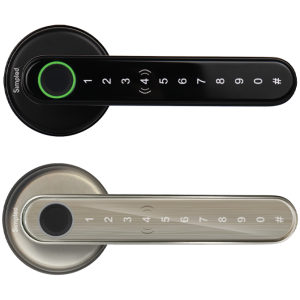
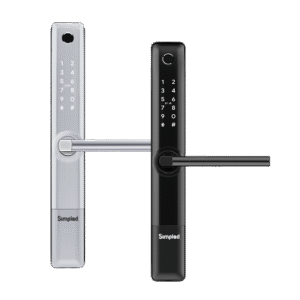
A modern example is the Simpled Smart Leverline Door Handle from Simpled UK. This smart privacy handle combines a lever-style design with advanced access methods including fingerprint recognition, passcodes, smartphone control, RFID tags, and app-based management. It also features functions such as Auto-Lock, Passage Mode, and Panic Exit, making it suitable for modern homes, offices, rental properties, and private internal spaces.
Magnetic Locks
Magnetic bathroom door locks are one of the newest forms of speciality locks. Magnetic locks are different from regular spring-loaded mechanical latches; they utilise magnetically engaged systems for smoother and quieter operation of the doors.
Since the latch is usually flush with the door when the door is open, the installation creates a much cleaner and minimalist look to the door. Magnetic bathroom locks are used because they provide:
- Opulent interiors
- Modern Housing
- Expensive Rehabilitations
- Low-key designs
Magnetic locking systems are great for privacy and looks, but aren’t without their shortcomings in providing forced-entry resistance, as heavy-duty security mortice locking systems can. Aside from how great they look, they have a good reputation for:
- Quiet Closing Mechanism
- Easily Operated
- Less Mechanical Wear
- Streamlined Hardware Profile
Expert Tip:
Match your bathroom handle lock with other interior door handles for a cohesive look.
5. Sliding Door Locks for Bathrooms
Bathrooms with limited space often feature sliding doors. Specialised sliding door locks ensure privacy without obstructing movement.
How It Works:
The lock engages when the door slides fully closed, often using a hook or magnetic catch.
Unlocked using a thumb-turn.
Best For:
Compact bathrooms or en-suites.
Modern flats and space-saving renovations.
Advantages:
Perfect for tight spaces.
No protruding handles.
Clean, contemporary finish.
Below we will introduce some examples of Sliding Door Locks handles:
Sliding Door Bolts
In contrast to mortise bathroom lock types, sliding door bolts provide the installer options for placement since the installer is not limited to the depth from the edge of the door to the back of the flush bolt.
The most significant disadvantage of a sliding door bolt also exists, that is, there is no external access in an emergency. Therefore, many designers are now utilising modern hook or integrated sliding door privacy lock systems as opposed to traditional sliding door bolts.
Hook Lock (Sliding/Pocket)
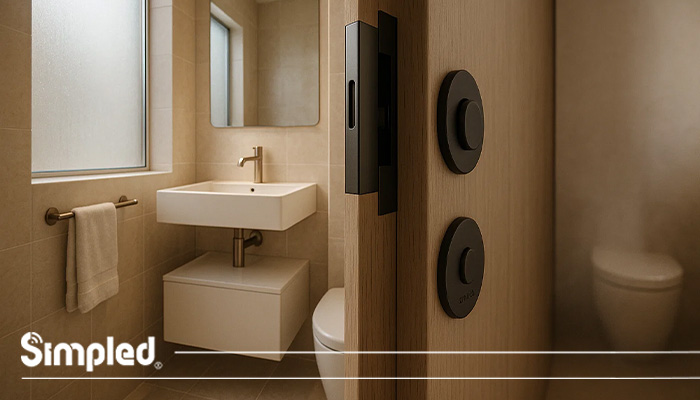
A hook lock is specifically designed for sliding and pocket door applications where it is impossible to use a traditional straight deadbolt. A hook lock features a “hook” shaped bolt that rotates inwards and engages the strike (or receive) using a hooking motion to hold the door securely closed while preventing the door from being broken via a traditional deadbolt. Although hook locks are exceptionally practical and functional, they must be installed with extreme precision. An improper installation will adversely affect the hook’s engagement with its corresponding locking mechanism (the strike or receiver). Therefore, they must take great care to ensure proper alignment. A hook lock is an integral part of the following types of bathroom lock systems:
- Pocket doors
- Sliding doors
- Toilet en suite doors
- Space-saving layouts, including minimalist designs
- Bathrooms with doors that require complete clearance from wall to wall
Pro Tip:
Opt for soft-closing sliding mechanisms to enhance comfort and prevent accidental slamming.
Factors to Consider Before Choosing a Bathroom Lock
Selecting the right bathroom lock isn’t just about looks. Here’s what to check before buying:
1. Privacy Level
Bathrooms need privacy — not full security. Choose locks that can be released externally in emergencies.
2. Ease of Use
Locks should be simple enough for children or elderly family members to operate comfortably.
3. Material & Finish
Opt for moisture-resistant materials like stainless steel or zinc alloy. Finishes such as brushed nickel or matte black complement modern UK bathrooms.
4. Door Type Compatibility
Different locks suit different door types — sliding, hinged, or pocket doors. Always verify latch depth and handle spacing.
5. Aesthetic Harmony
Choose a lock that blends seamlessly with your interior theme. Consistency across your door hardware enhances the overall design.
Step-by-Step: How to Replace or Install a Bathroom Door Lock
If you’re replacing an existing bathroom lock, here’s how to do it safely and efficiently:
Remove the old hardware:
Unscrew and detach the handle and existing latch.Check door alignment:
Ensure the latch plate aligns with the strike plate.Mark the new lock position:
Measure and mark the correct height — typically 1 metre from the floor.Install the latch and spindle:
Fit the latch through the door edge, followed by the spindle through the handle holes.Attach the handles:
Secure both sides using the provided screws.Fit the thumb-turn and release:
Install the privacy turn inside and emergency release outside.Test the mechanism:
Lock and unlock multiple times to confirm smooth operation.
Common Mistakes to Avoid:
Overtightening screws (can warp the handle).
Misaligning latch with strike plate.
Ignoring door thickness compatibility.
Smart Bathroom Lock Considerations for Modern Homes
In tech-savvy homes, even bathroom doors can integrate with smart ecosystems. Some smart locks support temporary access codes or auto-locking, ideal for rentals or hotels.
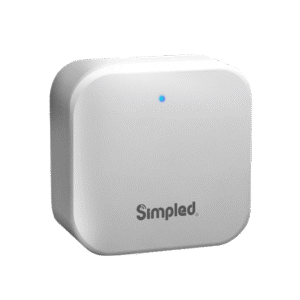
For instance, Simpled’s BLE-based smart locks connect seamlessly via WiFi bridges, maintaining privacy while offering flexibility. Their low-energy design ensures long battery life — a practical choice for any smart interior.
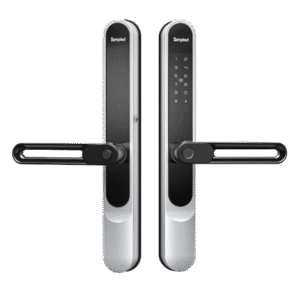
The SF Slim Smart Door Lock is a refined example of this innovation, combining fingerprint access, PIN codes, and app-based control in a sleek, modern design. Its slim profile and low-energy BLE technology make it suitable not only for main entrances but also for premium interior spaces where privacy and smart convenience matter.
Conclusion: Choose the Right Bathroom Lock for Privacy & Peace of Mind
A bathroom lock might seem like a small detail, but it has a big impact on comfort, privacy, and design harmony. From traditional thumb-turn locks to cutting-edge smart solutions, today’s market offers options for every home and style.
Whether you’re upgrading a single bathroom or modernising your entire property, choose a lock that blends functionality, safety, and aesthetics — and if you’re aiming for a seamless smart home experience, Simpled has you covered.
FAQs
1. What is the most common type of bathroom door lock in the UK?
The most common is the turn and release privacy lock, offering simple operation and emergency access.
2. Can I install a bathroom door lock myself?
Yes, most privacy locks can be DIY-installed with basic tools like a drill, screwdriver, and chisel.
3. Are smart locks safe for bathroom use?
Yes, modern smart locks with moisture-resistant designs are suitable for indoor use, offering privacy and keyless convenience.
4. Which finish is best for bathroom door locks?
Stainless steel or PVD coatings are ideal due to their resistance to corrosion and humidity.
5. What’s the difference between bathroom and bedroom locks?
Bathroom locks include an emergency release, ensuring safety and quick access if someone is accidentally locked in.




Leave a Reply