
Biometric security has become a defining feature of our digital and physical lives. From unlocking smartphones to securing smart locks, technologies like fingerprint recognition and facial recognition are replacing traditional PINs and keys. But when it comes to protecting your home or business, the question remains: fingerprint vs. facial recognition — which is better?
Both methods have advantages and drawbacks. Fingerprint systems are time-tested, affordable, and reliable, while facial recognition offers touchless convenience and advanced technology. In this article, we’ll break down how each works, where they shine, and where they fall short — so you can decide which is the best fit for your security needs
Understanding Biometric Security
Biometric security relies on unique human characteristics to verify identity. Unlike passwords or physical keys, which can be stolen or forgotten, biometrics are tied to you personally.
Fingerprint Recognition: Uses ridges and patterns on your fingertips.
Facial Recognition: Maps and analyzes unique features of your face.
Both are widely adopted in consumer technology and are increasingly used in smart locks, access control systems, and digital authentication tools.
At Simpled, our mission is to blend these advanced biometric technologies with stylish, durable, and energy-efficient smart locks designed for modern living in the UK.
Fingerprint Recognition: How It Works
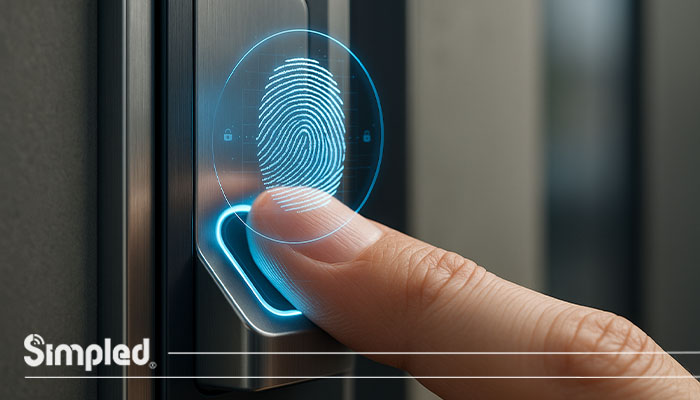
Fingerprint recognition scans your fingertip and compares it to a stored template. Modern scanners are highly accurate and can distinguish even between identical twins.
Benefits of Fingerprint Recognition
Fast and Reliable: Quick scans take less than a second.
Well-Established: Used for decades in law enforcement and smartphones.
Affordable: Fingerprint modules are inexpensive, lowering the cost of devices.
Multi-User Access: Many systems allow you to register multiple fingerprints (useful for families, tenants, or Airbnb hosts).
Limitations of Fingerprint Recognition
Wear and Tear: Cuts, dirt, or wet fingers can affect recognition.
Physical Contact: Requires touching the sensor, which some people find less hygienic.
Spoofing Risks: Although rare, fake fingerprints can sometimes bypass low-quality sensors.
👉 In smart locks like our Simpled models, high-grade sensors are designed to work even with slight dirt or moisture, ensuring smooth entry every time.
Facial Recognition: How It Works
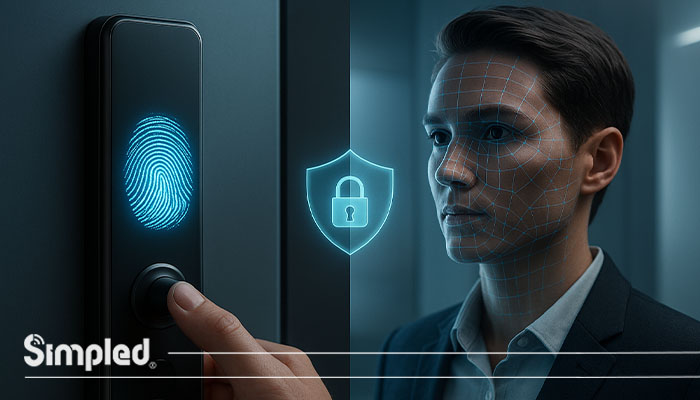
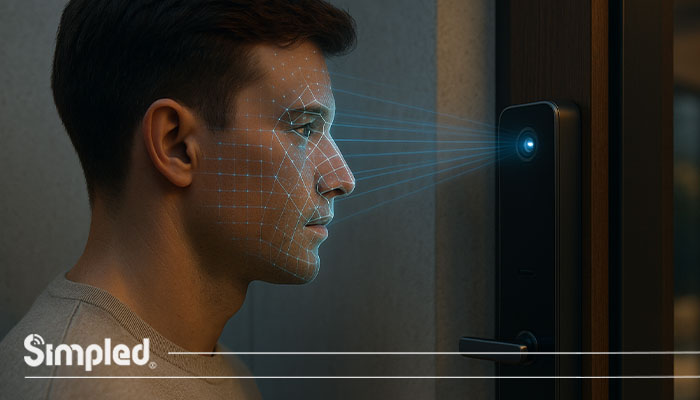
Facial recognition uses cameras and AI to analyze facial landmarks such as the distance between your eyes, nose, and jawline. More advanced systems use infrared depth mapping to prevent spoofing with photos.
Benefits of Facial Recognition
Touchless Access: No need to touch a sensor — ideal for hygiene-conscious environments.
Convenience: Works hands-free, useful when carrying bags or groceries.
Advanced Security: Modern systems resist spoofing with masks or photos.
Fast Recognition: High-end cameras identify users in milliseconds.
Limitations of Facial Recognition
Lighting Conditions: Poor light can reduce accuracy, though IR-based systems solve this.
Privacy Concerns: Some people are uneasy about cameras storing facial data.
Higher Costs: More expensive to implement compared to fingerprint scanners.
Obstructions: Masks, hats, or sunglasses can cause false rejections.
👉 For UK homes, where lighting conditions can vary dramatically, pairing facial recognition with other access options (like PIN codes or fingerprint backup) is a smart approach.
Fingerprint vs. Facial Recognition: A Direct Comparison
| Feature | Fingerprint Recognition | Facial Recognition |
|---|---|---|
| Speed | Very fast | Very fast |
| Convenience | Requires touch | Hands-free |
| Reliability | High, but can fail with wet/dirty fingers | High, but affected by lighting or masks |
| Cost | Lower | Higher |
| Security | Strong, proven | Advanced, with anti-spoofing features |
| Hygiene | Contact required | Touchless |
| Best For | Multi-user households, rentals, budget-conscious users | Premium homes, high-security needs, hygiene-conscious users |
Is Face Recognition Better Than Fingerprint?
The answer depends on your priorities.
If you want affordability, reliability, and proven technology, fingerprint locks are the better choice.
If you value touchless convenience and cutting-edge tech, facial recognition may be worth the investment.
For many households, a hybrid system offering both options is the ideal solution. That’s why modern smart locks — including Simpled’s latest models — are designed to support multiple access methods: fingerprint, face, mobile app, or PIN code.
Where Each Technology Works Best
Best Use Cases for Fingerprint Recognition
Rental Properties: Easily register or delete tenants’ fingerprints.
Families with Kids: Children can unlock doors without needing phones or keys.
Budget-Sensitive Buyers: Affordable without compromising security.
Best Use Cases for Facial Recognition
Luxury Homes: Hands-free access aligns with modern smart living.
Healthcare Settings: No need for physical contact (important for hygiene).
Busy Households: Entering with groceries, prams, or pets is easier when the lock recognizes you instantly.
The Role of Smart Locks in Biometric Security
Smart locks are where fingerprint and facial recognition truly shine. Unlike phones, which are personal, smart locks often serve multiple users. That means the chosen biometric system must balance security with convenience.
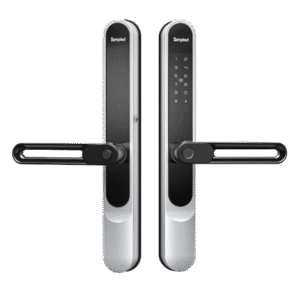
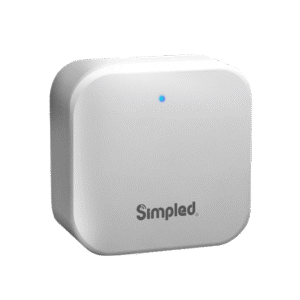
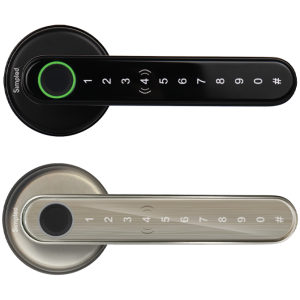
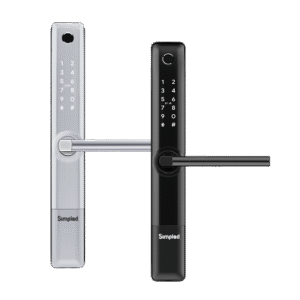
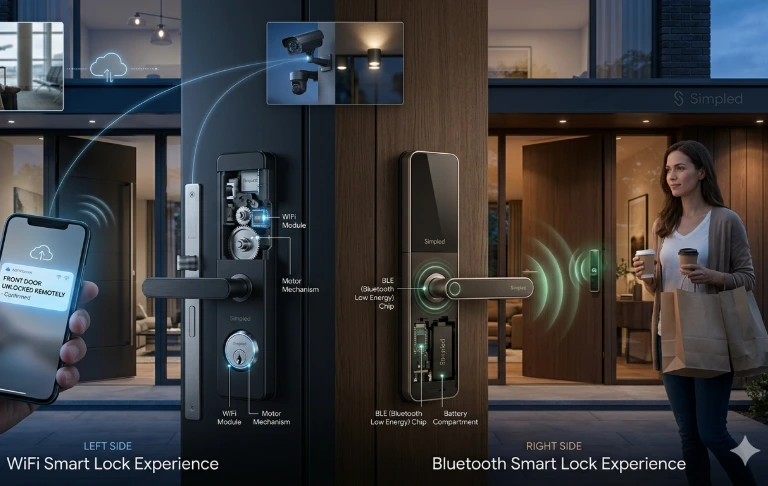
At Simpled, we design locks for long battery life, BLE-based low-energy connectivity, and smooth integration with smart ecosystems. Whether it’s our Slim Series Smart Locks or Fingerprint Door Handles, each product is crafted to deliver security without complexity.
Common Mistakes to Avoid When Choosing a Biometric Lock
Ignoring Power Backup: Choose locks with long-lasting batteries and emergency key overrides.
Not Checking Compatibility: Ensure the lock integrates with your smart home system (Alexa, Google Assistant, etc.).
Overlooking User Management: Consider how many users the system can store — crucial for families or rentals.
Focusing Only on Price: Cheaper models may cut corners on security features like encryption.
Future of Biometrics in Smart Homes
Looking ahead, the debate of fingerprint vs. facial recognition may shift toward multi-modal biometrics — combining fingerprints, facial recognition, and even voice recognition for layered security.
The push for Matter compatibility and cloud-based updates will also ensure that biometric smart locks remain secure and adaptable as threats evolve.
Conclusion
So, which is better — fingerprint or facial recognition?
Fingerprint recognition remains the practical, proven, and cost-effective choice for most homes.
Facial recognition offers futuristic convenience and enhanced security, particularly in premium smart homes.
At Simpled, we believe the best approach is flexibility. That’s why our products are designed to support multiple access methods, ensuring homeowners can choose what suits them best — today and in the future.
FAQs
1) Do facial recognition smart locks work in the dark?
Yes — the latest facial recognition smart locks use infrared (IR) or 3D depth sensors, allowing them to work even in low light or complete darkness. For example, premium models are designed to recognize your face instantly whether it’s day or night, ensuring 24/7 reliable access.
2) Can multiple users register on a fingerprint smart lock?
Absolutely. Most fingerprint smart locks can store multiple profiles, making them ideal for families, shared housing, or Airbnb rentals. Simpled’s fingerprint smart locks are built with multi-user support, allowing you to easily add or remove access for tenants, children, or guests.
3)What is the most reliable biometric smart lock for UK homes?
The most reliable biometric smart locks combine durability, advanced technology, and multi-access options. For UK homes, look for locks that handle changing weather, long battery life, and seamless app control. Simpled’s Slim Series and Fingerprint Door Handle smart locks are excellent examples, blending cutting-edge biometrics with stylish design and BLE-powered low-energy performance.



Leave a Reply