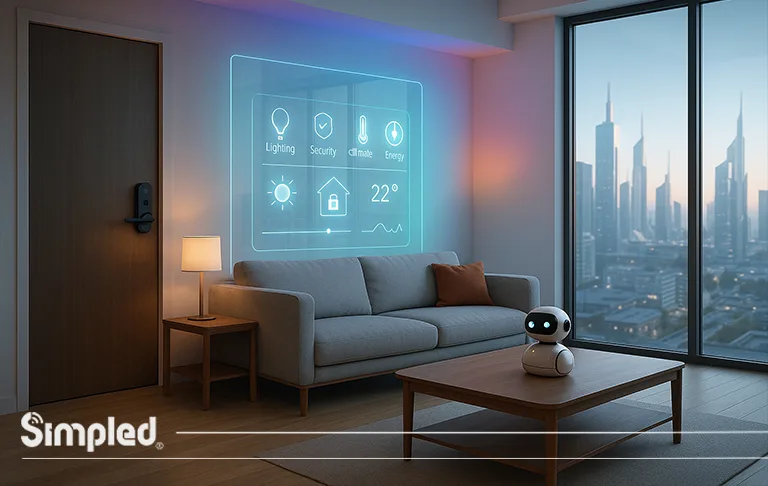
Smart homes are no longer a futuristic dream — they’re here, evolving faster than ever. From voice-activated lights to intelligent door locks that know when you’re home, technology is reshaping how we live, work, and feel safe. But what exactly does the future of smart homes look like? And which innovations will genuinely transform everyday living in the next few years?
In this article, we’ll explore the key trends shaping the smart home industry, highlight the opportunities and challenges, and share expert insights on where this market is heading.
Why the Future of Smart Homes Matters
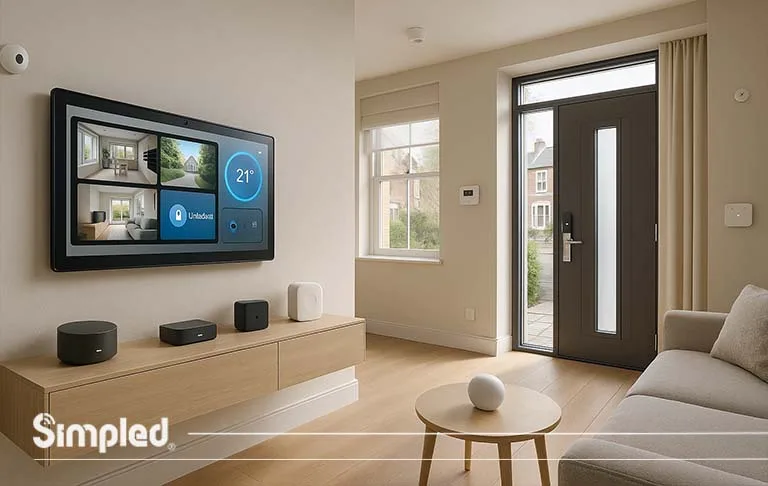
The modern home isn’t just a shelter — it’s becoming a living ecosystem of connected devices. For homeowners, that means more comfort, convenience, and security. For businesses, it’s about efficiency and sustainability.
Consider this: In the UK alone, nearly half of households now own at least one smart device. As adoption continues to rise, the focus shifts from novelty gadgets to holistic home experiences that integrate security, energy management, and lifestyle automation.
The Future of Smart Home Technology
Smart homes are moving away from individual device technologies working independently and toward a connected neural network.
Artificial intelligence will be used to monitor and respond to daily routines, environmental factors, and even emotional states to create a highly optimized experience. The other major change in the future for all smart homes is edge computing.
Homes will automatically reduce energy usage during peak times and read just when it is cheaper, all without needing any resident input. The next era will be defined by interoperability.
Open standards and unified platforms will finally allow devices from many different brands to integrate, making it easier for users to use their products without having to deal with one of their biggest pain points today, lack of compatibility.
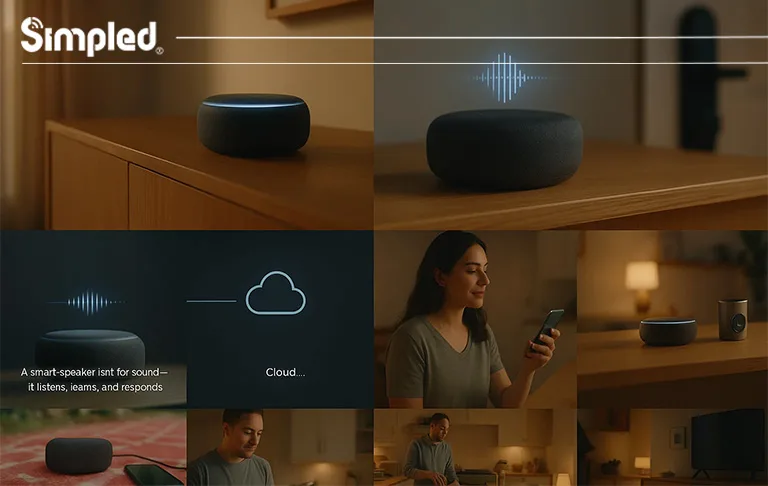
Smart homes are moving away from cloud computing and toward a localized approach, allowing for benefits such as:
- Faster Response Times
- Improved Privacy
The Future of Smart Home Devices
The future of the smart home devices will move away from the concept of “smart gadgets” and towards an experience where intelligence is in the background. Devices will become invisible and will become less demanding, while providing people with proactive support.
Future devices will rely heavily on advanced sensors, including presence and motion sensors with behavior recognition. Future devices will expect your needs, rather than responding only to your commands.
Lighting will automatically adjust according to your circadian rhythms, temperature will adjust based on your body’s activity level, and entertainment systems will adjust based on your mood and the time of the day.
Voice control will become one aspect of multi-modal interaction. The future of smart homes will include:
- Voice
- Gesture Recognition
- Facial Expression Analysis
- Context-Aware Automation
This implies less reliance on issuing commands and more natural ways of living. For instance, a mere gesture or a habitual behavior can set off a series of actions through various devices.
Future of Smart Home Security
Intelligent systems that have the capability of recognizing threats before they get worse will seriously diminish the role of traditional alarms. With the advent of biometric authentication, people will no longer need keys, codes, or even smartphones.
Techniques such as facial recognition, voice identification, and behavioral biometrics, will make sure that only the right people will be given access, at the same time, it will be seamless for residents.
Physical security and cybersecurity will go hand in hand. With the increasing connectivity of homes, the systems of the future will entail:
- Encrypted local data processing
- Automatic vulnerability detection
- Self updating security protocols
Another important feature of the future of smart home security systems will be community-based intelligence, whereby smart homes in the community will be able to share anonymous threat information, thus making it easier to detect unusual activity patterns in the community.
Are Smart Homes the Future of Living?
We have to say no. The future of smart home systems is not about the house being equipped with the latest and greatest in smart home technology. It’s about the house making life better, less stressful, and healthier, and accommodating the needs of its occupants as they age.
Smart homes are the future of living because they will play an important role in reducing environmental impact through intelligent resource management. The cost of smart home systems reduces and the systems become more professional.
In the end, the “smart home” of the future won’t seem like a “smart” environment; rather, it will have a human-centric focus, respond to humans, and support them without effort, an evolving space that evolves with the occupants over time.
Key Trends Driving the Future of Smart Homes
The evolution of smart homes isn’t just about adding more gadgets — it’s about creating a connected ecosystem that enhances security, comfort, energy savings, and everyday convenience. By looking at the most important trends, homeowners can better understand where to invest today to stay ahead of the curve tomorrow. Whether you’re considering a smart lock, energy management system, or AI-driven assistant, these trends highlight how technology will continue to shape the way we live.
1. Seamless Connectivity Through Universal Standards
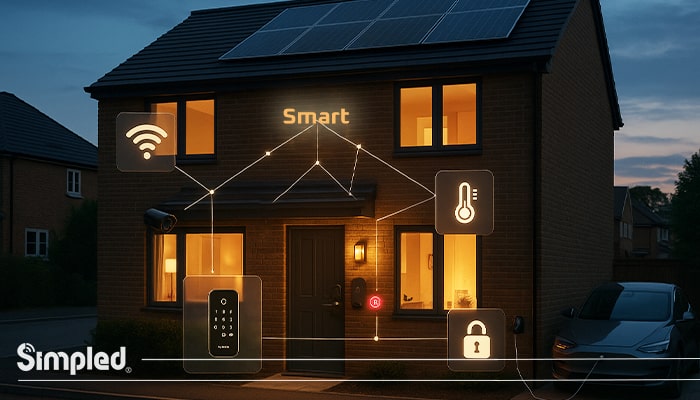
One of the biggest challenges in smart homes today is compatibility. Different devices often require separate apps or hubs, which can frustrate users. The future lies in universal standards like Matter, designed to ensure that products from different brands work seamlessly together.
For example, a Simpled locks equipped with Matter can connect not just to your Wi-Fi network but also to other Matter-enabled devices such as lights, cameras, or even thermostats — giving you unified control without juggling multiple apps.
2. Smarter Security and Next-Level Privacy
Security will always be at the heart of smart homes. While smart locks, cameras, and alarms are already popular, the next wave will focus on advanced encryption, AI-driven threat detection, and proactive alerts.
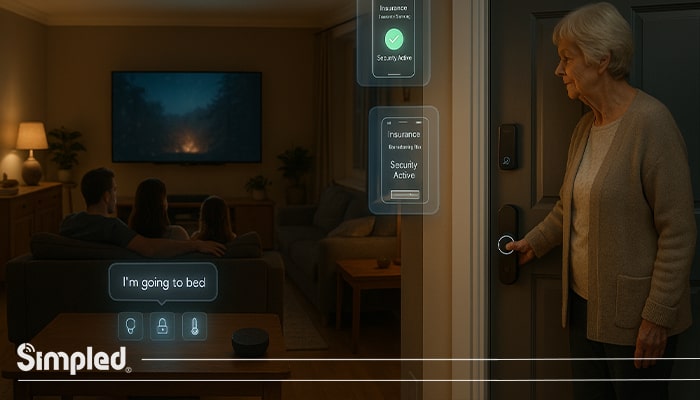
Imagine your smart lock recognizing unusual patterns (like repeated failed entry attempts) and automatically alerting your phone or even your insurance provider. Homeowners in the UK are particularly interested in locks that offer tamper alerts, two-factor authentication, and built-in Wi-Fi, features that Simpled already prioritises in our latest SS Slim model.
3. Energy Efficiency and Sustainability
With rising energy costs and environmental concerns, the future of smart homes will be deeply tied to sustainability. Smart thermostats, solar panel integrations, and energy-optimised appliances are just the beginning.
But security hardware can also play a role. For instance, BLE-based smart locks like Simpled’s consume ultra-low power, meaning batteries last for months — reducing waste and ensuring eco-friendly operation.
4. AI and Predictive Automation
Artificial Intelligence is shifting smart homes from reactive to predictive. Instead of simply responding to commands, devices will anticipate needs.
Lights that dim when you start a movie.
Doors that auto-lock when you leave the house.
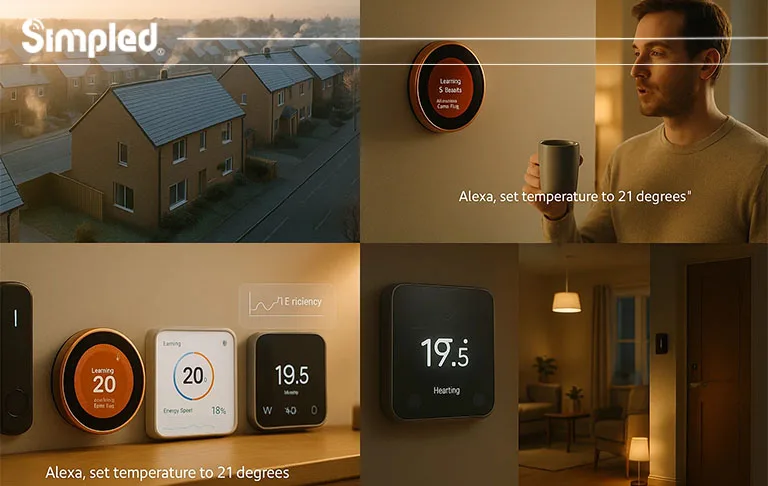
Heating that adjusts based on your daily schedule and energy tariffs.
Smart locks, in particular, are moving toward adaptive access control — granting temporary codes for visitors, monitoring usage patterns, and even learning when maintenance is due.
5. Voice Control and Natural Interfaces
Voice assistants like Alexa, Siri, and Google Assistant have become common, but the future of smart homes will focus on more natural, human-like interaction. Instead of rigid commands, you’ll simply say, “I’m going to bed,” and the system will lock doors, turn off lights, and adjust the thermostat.
Simpled smart locks already integrate with major voice platforms, enabling effortless lock/unlock control. In the future, biometric integration (fingerprint + voice) may become the new standard for convenience and security.
6. Enhanced Accessibility and Aging-in-Place Solutions
An often-overlooked trend is how smart homes support independent living for the elderly or people with disabilities. Voice control, remote access, and smart locks with large, intuitive interfaces are making homes more inclusive.
Imagine an elderly parent unlocking their door with a fingerprint instead of struggling with keys, or caregivers granting remote access in emergencies. This is where Simpled’s fingerprint front door locks shine, combining security with ease of use.
7. Integration with Insurance and Property Management
A growing number of UK insurance providers are offering discounts to homeowners who install certified smart locks and security devices. Before relying on insurance for lock-related issues, homeowners should also understand whether their policy covers broken or damaged door locks. Similarly, Airbnb hosts and landlords are adopting smart locks for easy guest management.
In the future, we can expect insurance-linked smart home packages, where your premiums adjust dynamically based on the security status of your home.
Challenges to Consider for the Future of Smart Homes
While the possibilities are exciting, homeowners must also weigh potential challenges:
Data Privacy Risks: The more devices collect and share data, the more important robust encryption becomes.
Over-Reliance on Internet: Wi-Fi outages can still disrupt functionality unless devices (like BLE-based Simpled locks) are designed with offline modes.
Upfront Costs: Smart home setups can be expensive, though prices are expected to decrease as adoption grows.
E-Waste Concerns: As devices evolve, modular, upgradeable designs will be crucial to prevent unnecessary waste.
How Simpled Sees the Future of Smart Homes
At Simpled, we believe the future of smart homes lies in balancing innovation with practicality. Our smart locks are designed not just for today’s needs but also for tomorrow’s standards — from Matter compatibility to ultra-secure encryption and long-lasting battery performance.
By focusing on customer pain points — such as easy installation, reliable offline access, and sleek design — we’re helping shape smarter, safer homes across the UK.
Conclusion
The future of smart homes promises more than just gadgets — it’s about creating connected, secure, and sustainable living environments. From AI-driven automation to eco-friendly devices and inclusive designs, the trends are set to redefine how we interact with our homes.
Smart locks like those from Simpled will play a central role in this transformation, ensuring homeowners enjoy both convenience and peace of mind.
Now is the perfect time to start thinking not just about adding smart devices, but about building a smart ecosystem that grows with you.
FAQs
1. What will smart homes look like in the future?
Future smart homes will feature AI-driven automation, Matter-based device compatibility, sustainable designs, and smarter security solutions like fingerprint locks.
2. How will Matter change the future of smart homes?
Matter ensures seamless interoperability between different brands, meaning your locks, lights, and sensors can all communicate through one unified standard.
3. Are smart locks essential for future smart homes?
Yes, smart locks are becoming a cornerstone of home automation, offering secure, flexible, and convenient access control that fits modern lifestyles.
4. Will smart homes help save energy?
Absolutely. Smart thermostats, lighting, and even energy-efficient locks can reduce waste, cut costs, and promote sustainable living.
5. What role will AI play in smart homes?
AI will shift smart homes from reactive to predictive — learning your habits, anticipating your needs, and automating tasks without manual input.



Leave a Reply