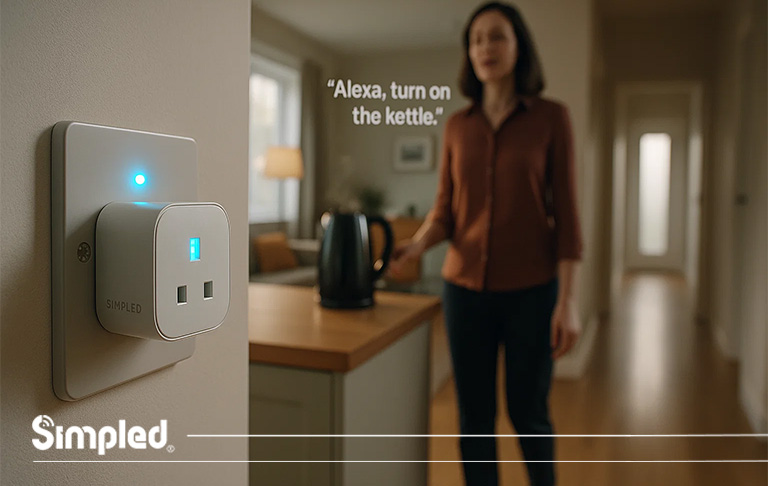
Smart plugs are one of the easiest and most affordable ways to start your home automation journey. Whether you want to control lamps remotely, set schedules for appliances, or integrate with Alexa for voice commands, these compact devices make your home instantly smarter — without replacing your existing setup.
In this guide, we’ll explore best smart plugs in the UK, what to look for before buying, and how to use them effectively to save energy and simplify daily routines.
What Is a Smart Plug and How Does It Work?
A smart plug is a Wi-Fi or Bluetooth-enabled adapter that fits between your wall socket and your electrical appliance. Once connected to your smart home network, it allows you to control that device remotely via an app or smart assistant like Alexa, Google Home, or Apple HomeKit.
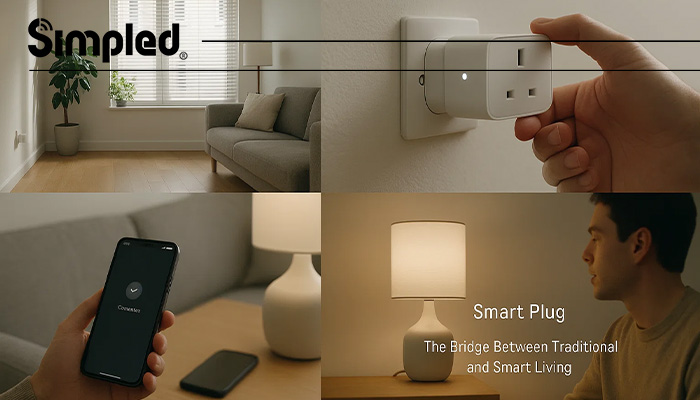
Think of it as a bridge between traditional and smart technology — turning a standard appliance into a connected one with just one plug.
How It Works
- Plug In: Connect the smart plug to any wall outlet.
- Pair: Link it to your home Wi-Fi network through the manufacturer’s app.
- Connect Devices: Plug your lamp, kettle, or heater into the smart plug.
- Control: Use your smartphone or voice commands (e.g., “Alexa, turn off the lamp”) to control it instantly.
Why Smart Plugs Are a Must-Have for UK Homes
Smart plugs are more than just convenient — they’re an essential upgrade for energy-conscious and busy households.
1. Energy Efficiency and Cost Savings
Smart plugs let you monitor and manage how much power each connected appliance uses. By scheduling devices to turn off when not in use, you can cut energy waste and reduce monthly bills — a valuable feature, especially with rising UK electricity costs.
Example: Schedule your heater to switch off automatically at 11 PM or your coffee machine to turn on five minutes before you wake up.
2. Enhanced Security
Smart plugs are also great for home security. You can set lights to turn on automatically when you’re away, giving the illusion that someone is home — an effective deterrent for burglars.
3. Seamless Integration with Alexa and Other Smart Hubs
Most of the best smart plugs in the UK work flawlessly with Amazon Alexa or Google Assistant, allowing you to use simple voice commands like:
“Alexa, turn off the TV.”
“Hey Google, switch on the lamp.”
If your home already uses a smart hub or ecosystem, ensure your chosen plug is compatible to maintain smooth automation.
The Best Smart Plug Options in the UK (2025 Edition)
In this section, we will discuss several of the best smart plug options in the United Kingdom that people continue to use through both 2025 and 2026. Our recommendations do not centre simply upon each plug’s specifications, but also on their real-world functionality, compatibility with other smart-device ecosystems, energy-efficiency ratings, and how well they match with standard UK household electrical configurations. What was considered the best smart plug UK in 2026 is now much more than just the ability to remotely turn on or off from a mobile app.
TP-link Tapo P110M
Currently, the TP-Link Tapo P110M smart plug is regarded by most UK consumers to be the best smart plug for Alexa, available today and is an excellent example of a product meeting the traditional standards of functionality, affordability and having far-reaching smart home capabilities.
It is also frequently ranked among the best smart plugs for Alexa UK users who want affordable yet reliable smart home automation.
Best Overall 2025/2026
In our opinion, if you were only going to buy a single image smart plug this year, i.e. 2025 or 2026, we would recommend TP-Link Tapo P110M without hesitation. The P110M is set up to allow users to continue using their preferred Voice Control Systems (Amazon’s Alexa or Google Assistant and Samsung SmartThings) following initial configuration, leading us to believe this product has a great opportunity for long-term use.
At an affordable price, you receive a Smart Plug with most features expected from much more expensive products, including Matter Support, Detailed Energy Tracking, Fast Response, and Extensive Remote-Control Functionality via the TP-Link App.
This product has proven time and time again and is very common for getting into Smart Home automation. There are numerous reasons why this model seems to take over the market; some of which include: Matter Support, Excellent App Functionality, & Size.
Matter Certificated
One of the largest reasons the Tapo P110M gets noticed is the presence of Matter certification. Matter is quickly becoming the universal standard for smart homes because it offers interoperability between many different ecosystems without the problems of vendor lock-in.
As such, the P110M allows one to control the same plug using four separate smart home apps, including:
- Apple Home
- Google Home
- Samsung SmartThings
As we move into 2026, the flexibility offered by the Tapo P110M matters more than ever since so many types of customers now use a mix of different ecosystems and not just a single one.
The setup process is refreshingly simple; most customers can use their preferred smart home app to scan a Matter QR code and connect the plug. That makes the Tapo P110M an excellent smart plug choice if you’re using Alexa in the U.K. and are also future-proofed on Apple or Google later on.
Another major benefit offered by the Tapo P110M is smart routine compatibility. The only limitation is that most advanced energy analytics remain exclusive to the Tapo native app, at least until those analytics are developed on Matter dashboards. You can easily include the P110M in larger automated routines like:
- Turn the lamps on at sunset.
- Power coffee machines on in the morning
- Automatically turn off computer equipment overnight.
- Sync with motion sensors or smart light scenes
Energy Monitoring
The Tapo P110M is an energy monitoring smart plug that provides useful information (not just convenience) to users. This plug provides users with:
- Daily Energy Usage Reports
- Weekly energy usage reports
- Monthly energy usage reports
- Cost Estimates of Energy Used
Using this information, users can tell which devices (appliances) use up the most power and consume the most energy. For the added functionality of energy monitoring alone, the P110M has superior long-term value when compared to the cheaper alternatives like the Tapo P100. Many UK households use smart plugs to specifically monitor the use of energy in:
- Air Fryers
- Gaming Computers
- Electric Heaters
- Washing Machines
- Television and Entertainment Systems
Compact Design
A common reason that smart plugs fail within UK homes is that they are simply too large in size for standard smart plug sockets in the UK. The P110M solves this problem well. Most importantly, when using a Tapo P110M, it rarely blocks the other outlet on the socket, as a frequent problem with older plugins such as the TP-Link.
The size of the footprint for the product remains one of the key elements that make it practical in day-to-day use. When users build larger smart home systems, having an efficient footprint can become very important almost immediately. Its compact size allows it to be used in:
- Normal UK double sockets
- Crowded power strips
- Crowded Extension Cords
- Behind Furniture
Third Reality Plug UZ1
The Third Reality Plug UZ1 may not be as well known as a potential smart plug for users in the UK; however, it has garnered quite a bit of interest from Zigbee and Home Assistant users due to its small footprint, reliability and good mesh networking capabilities.
Therefore, if you are already using a Zigbee ecosystem, this may be one of the best smart plugs available to you today.
Zigbee Protocol
The UZ1 cannot be compared to Wi-Fi smart plugs (due to the fact that they use a totally different communication protocol – Zigbee vs. Wi-Fi). Essentially, Zigbee devices create a mesh network whereas powered devices repeat the data transmissions from other devices in order to improve their overall performance.
As a result, larger homes have a much better chance of accomplishing reliable real activity versus a smaller home. Here are some of the practical benefits of using the UZ1:
- Faster response times
- Less congestion on your Wi-Fi network
- More reliable sensors
- Minimum latency for automation
- Continue to work locally even when the internet goes down.
The UZ1 has become very popular with users who are using one of the following systems at home:
- Home Assistant
- Zigbee2MQTT
- SmartThings
- Hubitat
- Homey Pro
The biggest benefit of using Zigbee versus Wi-Fi is the ability for users to execute local automations without relying on a third-party service (cloud). Zigbee’s dependability is just one reason it tends to be more popular than Wi-Fi among a considerable number of intelligent smart home users.
UK Specific Design
Many smart plugs are created globally first before being adjusted to function properly with UK sockets. The best smart plug UK is made specifically to solve the most significant issue that UK type G sockets have, which is that there often isn’t enough room to plug in different types of devices at once.
Finding different smart plugs to best serve the most common locations for use (like the kitchen), where the sockets are nearly always located in the immediate area of the physical switches, means less hassle when plugging in devices while simultaneously using switches for lights and appliances.
The only downside is that the design of the UZ1 presents a minor issue regarding access to the manual power switch; it is located on the side of the smart plug. Placing 2 devices right next to each other can open up significant challenges in using the manual button.
Otherwise, the overall design is presently regarded as one of the best on the market for UK use. This is excellent because the plug will be able to fit in:
- Double-wall sockets
- Tightly positioned kitchen cooker sockets
- Standard British extension leads.
- Packed plug strips
Fits Power Strips
The UZ1 connects with and works correctly within standard UK extension leads/sockets, but has clearly been designed with how to work virtually directly adjacent to other devices and at the same time, will provide plenty of room to attach other plugs to standard UK power strips.
When selecting the best smart plug UK to use; it is not uncommon for there to be a large number of devices that technically fit into a UK plug socket, but when used in an extension lead, many have ultimately failed miserably.
If you are a user building a dense Zigbee mesh network, grouping multiple plugs together for one location is a huge benefit. UZ1 was designed to separate itself to meet the need of fitting comfortably into the standard of the best smart plug UK strips while providing the ability to plug a device beside another device without blocking access to the other devices:
- Kitchen appliances
- Home office equipment
- Charging stations
- Entertainment systems
- Multi-device automations
Energy Monitoring
Real-time energy monitoring is included in the UZ1. What makes this particularly compelling is the speed at which the rezoning of the plug begins reporting power consumption after the initial pairing takes place.
Due to Zigbee’s ability to operate locally with minimal latency, these automations will occur much faster and are significantly more responsive than most cloud-based alternatives. As of the year 2026, energy monitoring no longer falls into the category of “Luxury”.
Rather, it has transformed into one of the absolute highest-value smart home features. Creative automation has already been established by innovative advanced customers with the use of this function, such as:
- Commanding the kitchen light to turn on when the air fryer starts cooking.
- Command the ventilation system to start when the air fryer starts cooking.
- Monitoring the appliance for standby consumption.
Eve Energy
Eve Energy is considered a premium smart plug. It is neither the least costly option nor the smallest product. It also aims at customers other than casual buyers. Nevertheless, for customers who are heavily invested in Apple HomeKit and Thread technology, it remains one of the strongest and most reliable smart plugs available in the current smart home market.
Thread and Matter Support
For Eve Energy, the central theme is based upon: Thread establishes a self-healing mesh network wherein devices directly connect to and communicate with each other without relying heavily on Wi-Fi routers.
As a result, you will experience benefits such as:
- Faster response time
- More reliability
- Fewer instances of the device being unavailable
- Lower latency in automations
- Increased stability of the smart home
With support for the Matter protocol, Eve Energy now works natively with all of these systems:
- Apple Home
- Alexa
- Google Home
- SmartThings
Though Apple customers will get the best overall experience. The outlet performs exceptionally well when working in conjunction with devices such as:
- HomePod mini
- iPhone
- HomeKit automations
Hardwired Outlet Option
Another unique aspect of the Eve ecosystem is the Eve Energy Outlet. Instead of plugging into a standard outlet, this version of the outlet replaces the existing electrical outlet in your home, resulting in a much more permanent and aesthetically pleasing installation.
In addition to being a tidier visual alternative to bulky plug-in adapters that hang down from the wall, the hardwired version offers 2 separate outlets, both of which can be:
- Controlled individually
- Monitoring of energy usage at each outlet
- Advanced scheduling
- Automations based on geofencing
- More visually seamless appearance
For higher-end smart homes, this will create a much more seamless appearance than will occur if using bulky plug-in adapters that hang off the walls. Installation of the outlet requires knowledge of electrical wiring and compliance with UK electrical regulations.
Apple HomeKit Focus
Eve Energy has an evident focus on Apple users. Matter does improve cross-platform compatibility, but most of the advanced functionality of Eve Energy still relies on Apple’s ecosystem.
Eve has the most comprehensive energy analytics in their app, which continues to be centered upon iOS. For Android households, alternatives such as TP-Link Tapo would probably be the better overall choice.
However, for those with a solely Apple Smart Home, Eve Energy remains one of the most polished products on the market. Thus, the iPhone user can expect:
- Maximize automation control
- Detailed Energy Data
- Simplicity with firmware updates
- Superior HomeKit Integration
Merros Smart Power Strip
For renters, smart home technology can be utilised in a portable fashion. It is time to control multiple devices. The Meross Smart Power Strip is available at an affordable price and provides an excellent solution for automating different devices in homes.
The Meross Smart Power Strip supports four AC outlets with individual controls. Users can turn off or on each outlet individually. For example:
- Monitor
- Edge light
- Speakers
- Printer
- Charger
- PlayStation or Xbox
4 AC Outlets
The Meross Strip has four individually controllable AC wall outlets. With this configuration, you are able to control your occupied outlets. Each outlet is represented independently within your Smart Home app.
Therefore, routines and automation involving the outlets will have a high level of flexibility. The performance of Meross is also great; the vast majority of commands (at least 90%) would execute within about one second.
From a user’s standpoint, this is far more ideal than purchasing 4 separate smart plugs. For example, your:
- Monitor
- Desk Lamp
- Speakers
- Printer
- Charger
- Gaming Console
4 USB Ports
In addition to the AC outlets, Meross also has four USB ports. The ports have a combined output of 20W, so they won’t meet ultra-fast charging inventions. However, the ports are extremely useful for daily use in an office environment. These ports are useful for:
- Smart Phones
- Tablets
- Desk Accessories
Individual Socket Control
Flexibility is the main benefit of the Meross strip. The ability to control devices independently makes the strip very useful for users who have numerous devices located in close proximity to each other.
£35 makes this a very cost-effective option compared to having to purchase multiple Smart Plugs separately. Each AC outlet offers individual operation and can be programmed to perform highly creative automation, including the following examples:
- Turn off the Office Monitor for the night.
- Turn on the Lamps at Sunset
- Power Cycling Your Networking Hardware Remotely
- Automate your Entertainment System
If lowering your electric expenses is important to you, then look for Smart Plugs that provide detailed power monitoring information. Energy Monitoring has become one of the main reasons households throughout the UK are purchasing Smart Plugs in the first place.
Typically found in close proximity to each other, UK socket spacing is very close together. Always check if a plug could block the neighbouring socket or is properly compatible with any extension lead used.
How to Choose the Best Smart Plug for Your Home
When selecting the right plug for your UK home, consider the following factors:
1. Connectivity
- Wi-Fi Plugs: Great for remote access and app control.
- Bluetooth (BLE) Plugs: More energy-efficient and ideal for local control without internet.
- Zigbee/Z-Wave Options: Best for homes with smart hubs.
2. Compatibility
Ensure it supports your ecosystem — whether it’s Alexa, Google Home, Apple HomeKit, or Simpled’s upcoming smart ecosystem.
3. Energy Monitoring
If energy saving is a priority, opt for models with real-time energy tracking to identify and reduce unnecessary usage.
4. Safety and Build Quality
Look for BS1363-certified plugs designed for UK voltage and sockets. Avoid cheap, unbranded models that lack surge protection or proper certification.
Setting Up a Smart Plug: Step-by-Step Guide
Step 1: Plug it in and power it up.
Step 2: Download the companion app (Kasa, Alexa, or Simpled App).
Step 3: Connect the plug to your home Wi-Fi or BLE network.
Step 4: Add your appliance — lamp, kettle, heater, etc.
Step 5: Assign a name and test voice commands or automation routines.
Expert Tip:
Group multiple smart plugs together for one-touch control — for instance, “Goodnight Mode” can switch off all your downstairs devices at once.
Common Mistakes to Avoid
- Buying plugs incompatible with your hub or assistant
- Overloading plugs beyond rated amperage
- Forgetting to rename devices (makes automation confusing)
- Ignoring firmware updates
Final Thoughts
Smart plugs are one of the easiest, most affordable entry points into smart home automation. Whether you’re focused on energy savings, security, or Alexa voice control, choosing the best smart plug in the UK helps simplify your daily routines while cutting energy waste.
With Simpled’s upcoming BLE-powered smart plug, homeowners can expect superior connectivity, low energy consumption, and effortless integration with the brand’s growing smart ecosystem — from smart locks to digital viewers.
FAQ
- What does a smart plug do?
A smart plug connects to your Wi-Fi and lets you control any appliance remotely using an app or voice assistant. - Do smart plugs save electricity?
Yes — they help reduce energy waste by scheduling automatic shutdowns for unused appliances. - Can I use smart plugs without Alexa?
Absolutely. Most smart plugs also work with Google Home, Apple HomeKit, or their own apps. - Are smart plugs safe?
Yes, provided you buy certified UK plugs (BS1363). Avoid cheap imports that may not meet safety standards. - What is the best smart plug for Alexa users in the UK?
For Alexa, the Amazon Smart Plug or TP-Link Kasa are excellent choices, with Simpled’s upcoming plug expected to bring next-level energy efficiency.



Leave a Reply