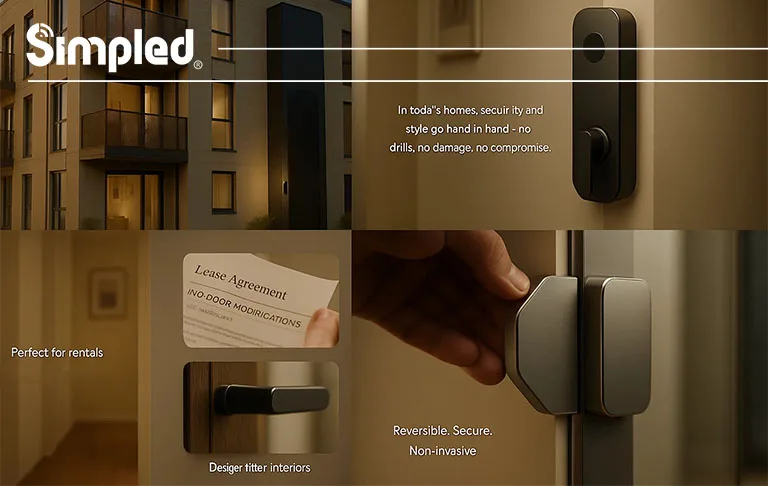
In today’s modern homes — especially in apartments, rental properties, and newly designed interiors — door security doesn’t have to come at the cost of aesthetics. If you’ve ever wondered how to install a lock on a door without drilling, the good news is: it’s easier than you think.
Thanks to no-drill smart locks and adhesive or clamp-based installation systems, you can now secure your doors without damaging them — no holes, no wiring, and no tools required.
Whether you’re a tenant wanting a removable smart solution or a homeowner avoiding permanent modification, this guide will walk you through everything you need to know.
Why Install a Lock Without Drilling?
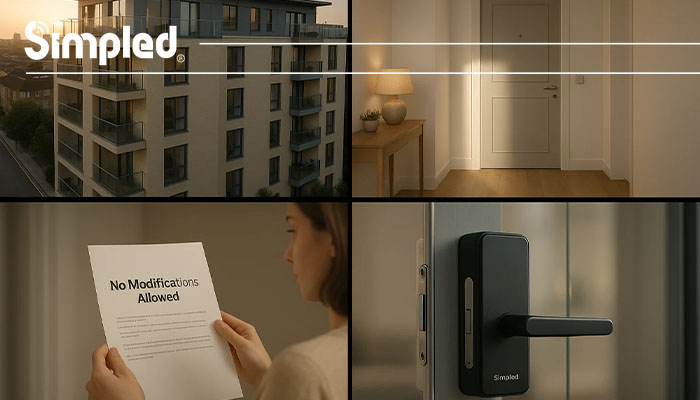
Not every door is suitable for traditional drilling. Many UK residents — especially in flats and rental properties — face these common restrictions:
Landlord or lease agreements that forbid door modifications.
Glass or composite doors that can crack or weaken from drilling.
Interior doors where drilling is unnecessary or aesthetically undesirable.
That’s where drill-free smart locks come in. These locks use innovative mounting systems, adhesive plates, or mechanical clamps to attach securely without tools.
At Simpled, we design our smart locks — like the Simpled Slim Door Lock and Simpled Glass Door Smart Lock — with non-invasive installation in mind, combining security, style, and simplicity for every home type.
Types of No-Drill Locks Available
1. Adhesive-Mount Smart Locks
Perfect for renters or lightweight internal doors. These locks come with strong industrial adhesive that holds the device firmly to the surface.
Pros:
No tools or holes required.
Fast and reversible installation.
Sleek and minimal appearance.
Cons:
Not ideal for heavy doors or outdoor exposure.
Adhesive needs clean, flat surfaces for best grip.
2. Clamp or Latch-Over Locks
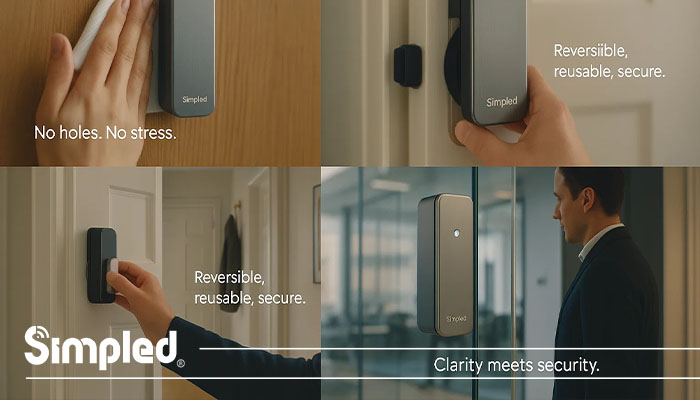
Designed for doors with existing latch systems, these locks fit over your existing thumb turn or key knob using a secure clamp.
Pros:
Reversible and reusable.
Ideal for smart locks that retrofit existing mechanisms.
Maintains full door integrity.
Cons:
Must match the size and shape of your current hardware.
3. Magnetic and Glass Door Locks
For frameless glass doors or sliding panels, drilling is not an option — but magnetic or clamp-style smart locks make installation effortless.
For example, the Simpled GF Glass Door Lock uses a clamp-on fitting that attaches directly to glass panels, maintaining transparency and elegance while ensuring reliable security.
Pros:
Ideal for offices and modern interiors.
No frame or drilling required.
Works seamlessly with smart systems.
Cons:
Must be installed correctly to align the latch and sensor.
Step-by-Step: How to Install a Lock on a Door Without Drilling
Installing a drill-free lock doesn’t require technical skill. Follow these general steps to ensure a smooth installation:
Step 1: Choose the Right Lock
Start by identifying your door type:
Wooden – Compatible with adhesive or clamp locks.
Glass – Use clamp-style or magnetic glass locks.
Metal/Composite – Choose locks with reinforced adhesive pads.
Pro Tip: For exterior doors, always choose weather-resistant models.
Step 2: Clean the Surface Thoroughly
Use rubbing alcohol or a mild cleaner to remove dust, oil, or paint residue from the surface. Adhesive mounts require a clean base for full strength.
Step 3: Align the Lock Properly
Hold the lock body in place where you plan to mount it. Check for:
Smooth handle operation.
Proper latch alignment.
No obstruction from door frames or mouldings.
Mark light reference points using masking tape for perfect alignment.
Step 4: Attach the Lock
Depending on your lock type:
Adhesive Mount: Remove the protective film and press firmly for 30–60 seconds.
Clamp Type: Tighten screws gently around the door handle or latch mechanism.
Magnetic/Glass Lock: Secure the clamp evenly without over-tightening.
Expert Tip: Wait at least 24 hours before using adhesive-mounted locks to ensure full bond strength.
Step 5: Connect the Smart Module
If it’s a smart lock, pair it with your mobile app or smart hub:
Download the companion app.
Turn on Bluetooth.
Follow the pairing instructions.
Test the lock remotely or via PIN/fingerprint if available.
Simpled locks use Bluetooth Low Energy (BLE) for ultra-low power use, ensuring long-lasting performance with or without WiFi.
Step 6: Test and Calibrate
Finally, test your lock several times:
Lock and unlock manually and via app.
Check latch response and door closure alignment.
Enable auto-lock or night mode features if supported.
Common Mistakes to Avoid
Skipping surface cleaning. Even a bit of dust weakens adhesive strength.
Mounting too close to the edge. This can cause misalignment.
Over-tightening clamps. Especially dangerous for glass doors.
Ignoring manufacturer calibration. Always test before regular use.
Expert Tips for a Secure and Long-Lasting Installation
Follow temperature guidelines: Adhesives cure best above 15°C.
Use mounting guides: Some brands, like Simpled, include alignment templates.
Pair with smart home systems: Integrate with Alexa, Google, or Apple HomeKit for voice control and automation.
Replace batteries on schedule: Smart locks notify you when power is low — don’t ignore it.
Benefits of No-Drill Lock Installation
Damage-Free: Keeps doors intact — perfect for rentals or glass doors.
If you live in a flat or rental property, exploring the best keyless entry lock for apartments can help you find secure, landlord-friendly solutions that offer convenient access without permanent door modifications.
Quick Setup: Install in minutes without calling a locksmith.
Portable: Move the lock to a new property easily.
Smart Features: Enjoy keyless entry, auto-locking, and remote monitoring.
Stylish and Minimal: Modern locks like the Simpled Slim Series are designed to complement UK interiors.
When Should You Avoid No-Drill Installation?
While these locks are secure for most domestic and office doors, avoid using adhesive-only locks on:
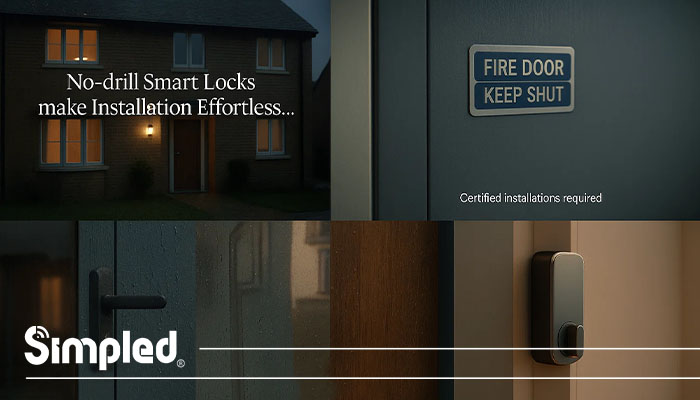
Fire-rated doors (requires certified installations).
Heavily used exterior doors with extreme weather exposure.
Uneven or textured surfaces that prevent proper adhesion.
If your property has these door types, opt for a semi-permanent or retrofit solution compatible with your existing hardware.
Simpled’s Approach to Effortless Installation
At Simpled, we believe security shouldn’t require tools or technicians. Our Slim Series Smart Locks are engineered for minimal installation effort:
BLE-based system: Works with long-lasting batteries and low energy use.
WiFi bridge optional: For full remote access without constant connection.
Smart design: Fits UK-style handles and euro cylinders.
No-drill setup: Securely attaches to most doors without permanent alteration.
With Simpled, your lock installation becomes a weekend DIY project — not a renovation.
Conclusion: Modern Security, Made Simple
Installing a lock without drilling is no longer a compromise — it’s a choice for smarter, cleaner living. Whether you live in a rental, a new-build flat, or a designer home, no-drill smart locks offer the perfect blend of security, convenience, and elegance.
By following the steps above and choosing a reliable brand like Simpled, you can enjoy effortless protection that complements your lifestyle — no tools required.
FAQs
1. Can you install a lock without drilling holes in the door?
Yes. Modern smart locks use adhesive or clamp systems to install securely without any drilling or door damage.
2. Are no-drill locks as secure as traditional ones?
High-quality no-drill locks, like Simpled’s BLE smart locks, are engineered with strong adhesives and locking mechanisms comparable to traditional hardware.
3. How long does a no-drill smart lock last?
With proper installation and care, these locks can last for years. Replace adhesive mounts or batteries as needed.
4. Can I remove the lock later without damage?
Yes. Most adhesive locks can be safely removed with gentle heat, leaving minimal or no marks.
5. Are no-drill locks suitable for glass doors?
Absolutely. Simpled’s GF Glass Door Lock is designed specifically for glass and frameless installations without drilling.



Leave a Reply