
Biometric fingerprint technology has become one of the most reliable ways to secure homes, offices, and personal devices. From unlocking your smartphone to accessing smart locks, fingerprints have replaced traditional keys and PIN codes for millions worldwide. But have you ever wondered: how do biometric fingerprint scanners work, and why are they considered so secure?
In this guide, we’ll break down the science, technology, and real-world applications of fingerprint authentication in a way that’s easy to understand. Whether you’re curious about the engineering behind it or considering installing a fingerprint smart lock in your UK home, this article gives you the complete picture.
Understanding Biometric Fingerprints
Biometrics refers to the measurement of unique physical or behavioral characteristics used for identification. Among these, fingerprints are the most widely adopted because:
Uniqueness: No two fingerprints are identical, even among identical twins.
Permanence: Fingerprints don’t change significantly over time, unlike facial features.
Ease of use: They can be scanned quickly without requiring extra tools or memory.
This makes fingerprint authentication a convenient yet highly secure choice for modern biometric security systems.
How Biometric Fingerprint Works
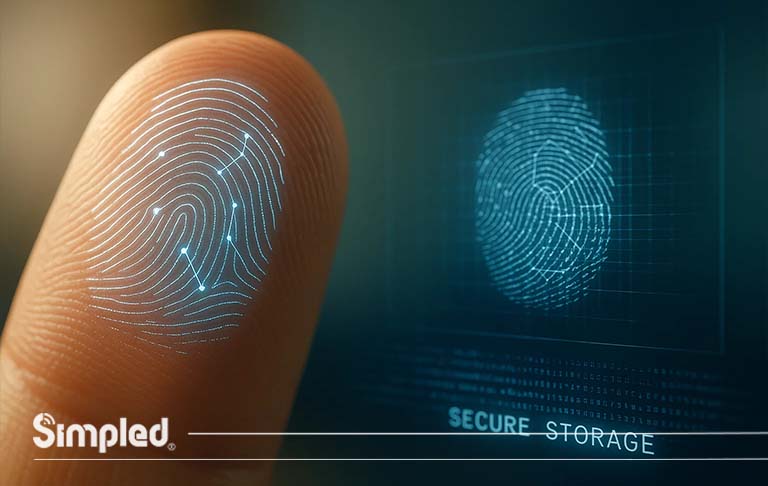
At the core, fingerprint scanners operate by capturing the unique ridges and patterns of your fingertip, converting them into a digital template, and comparing that template against stored data.
Here’s the basic process step by step:
Image Capture – The scanner detects the ridges, valleys, and minutiae points (tiny details like ridge endings or bifurcations) of your finger.
Feature Extraction – Software analyzes these details and creates a mathematical representation.
Template Creation – Instead of saving your actual fingerprint, the system stores a digital “map.”
Matching – When you scan your finger again, the new template is compared with stored templates for authentication.
👉 The key advantage: your actual fingerprint image isn’t stored, reducing the risk of identity theft if the database is hacked.
Types of Biometric Fingerprint Scanners
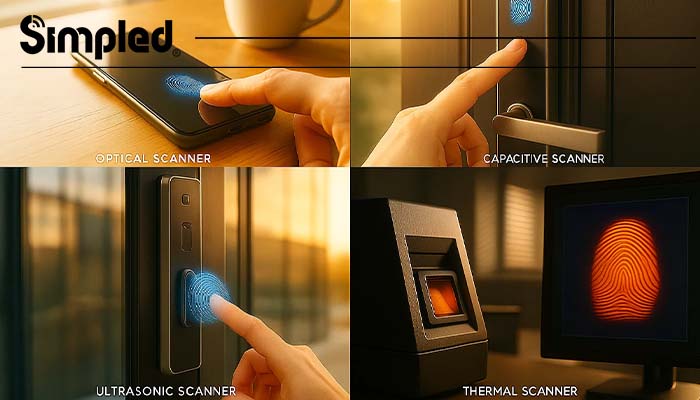
Not all fingerprint scanners are the same. Different technologies are used depending on cost, application, and security level.
1. Optical Scanners
Capture a digital photo of your fingerprint using light.
Widely used in older smartphones and low-cost devices.
Pros: Affordable, simple to use.
Cons: Easier to trick with high-resolution images.
2. Capacitive Scanners
Use electrical currents to measure ridge patterns.
Found in most modern smartphones and security systems.
Pros: More secure than optical scanners, harder to spoof.
Cons: Can struggle with wet or dirty fingers.
3. Ultrasonic Scanners
Use sound waves to create a 3D map of the fingerprint.
Common in high-end devices and smart locks.
Pros: Works in poor lighting and with wet fingers.
Cons: More expensive.
4. Thermal Scanners
Detect the temperature difference between ridges and valleys.
Rare today but used in certain niche applications.
How Does Fingerprint Authentication Work in Real Life?
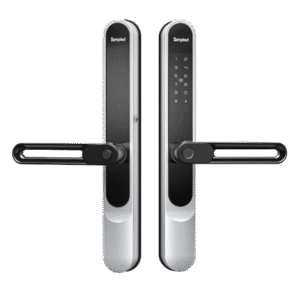
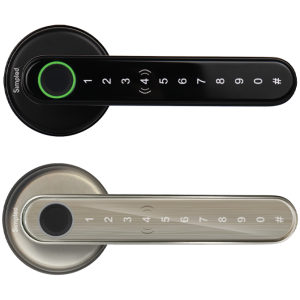
Let’s take the example of a smart lock for UK homes.
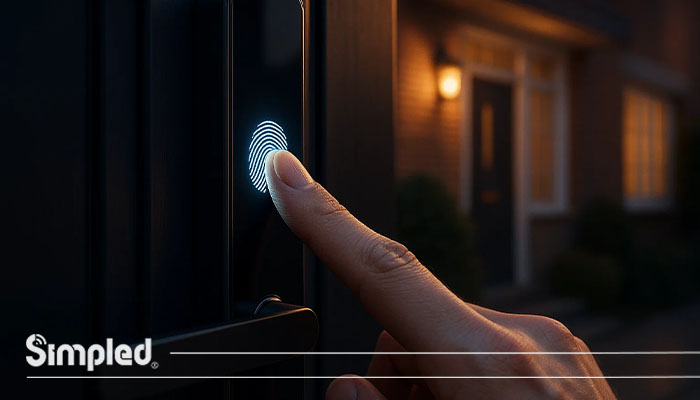
When you first set it up, you register your fingerprint (enrollment stage).
The lock converts your fingerprint into a secure template.
Each time you unlock the door, the scanner checks if your fingerprint matches the stored template.
If it matches, the lock opens instantly — no keys required.
For homeowners, this means no more worrying about lost keys or forgotten PIN codes.
Benefits of Fingerprint Biometrics
Why do so many people prefer fingerprint smart locks or devices?
High Security – Your fingerprint can’t be guessed like a password.
Convenience – Unlock doors or devices with a single touch.
Multi-User Support – Store multiple fingerprints for family members or employees.
Durability – Works across devices for years without degradation.
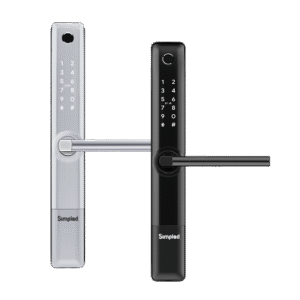
Low Power Use – BLE-powered locks, like those by Simpled, are energy-efficient with long battery life.
Common Challenges and Misconceptions
Even the best technology isn’t perfect. Let’s clear up a few myths:
Wet or Dirty Fingers: Scanners may struggle if your finger is greasy, wet, or injured.
Spoofing Concerns: Advanced scanners (like ultrasonic) are highly resistant to fake fingerprints.
Data Storage: Systems store mathematical templates, not your actual fingerprint image.
Privacy Issues: With trusted manufacturers, your fingerprint data never leaves the device.
👉 Best practice: Always choose a reputable brand that prioritises security and data protection.
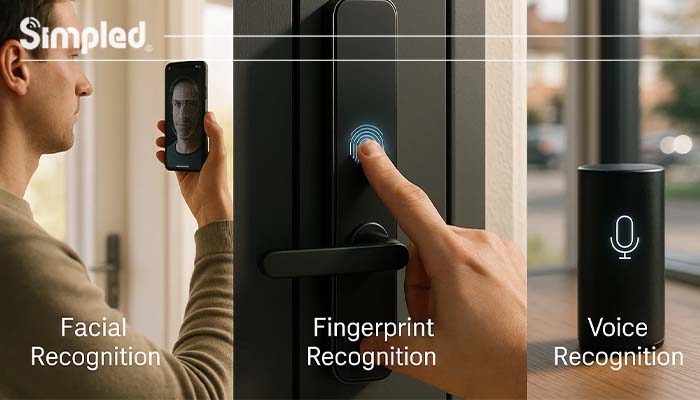
Fingerprint Scanners vs. Other Biometrics
People often ask: Is fingerprint recognition better than facial recognition?
Fingerprint: Works in all environments, doesn’t rely on cameras, highly accurate.
Facial Recognition: More convenient (no touch required), but lighting conditions and masks can interfere.
Voice Recognition: Simple but less secure, affected by background noise.
In short, fingerprint scanners remain the gold standard for reliable and secure authentication, especially for smart locks.
Real-World Use Cases
Smartphones – Quick device unlocking and payment authentication.
Smart Locks – Keyless entry for homes and offices.
Banking & Payments – Fingerprint-based authentication for secure transactions.
Airports – Fast-track passenger identity verification.
For UK homeowners, the most practical and reliable use case remains smart locks. They balance convenience, energy efficiency, and robust security.
Conclusion: Why Fingerprint Biometrics Are Here to Stay
Fingerprint authentication isn’t just a passing trend — it’s a cornerstone of modern security. Whether you’re protecting your smartphone, financial data, or home, fingerprint scanners offer a balance of convenience, security, and trust that few other methods can match.
As smart homes evolve, choosing fingerprint-enabled devices from a company that values innovation and security — like Simpled — ensures you’re prepared for the future without compromising on safety.
FAQs
How does a biometric fingerprint scanner work step by step?
It captures your fingerprint, creates a digital template, and matches it with stored data to grant access.
Is fingerprint authentication safer than PIN codes?
Yes. Fingerprints are unique and harder to steal or guess compared to PIN codes.
Can fingerprint scanners be hacked?
It’s very difficult, as modern scanners store encrypted templates, not actual fingerprint images.
Do smart locks with fingerprint work during a power outage?
Yes. Most run on batteries and include backup entry options.
Which fingerprint smart lock is best for UK homes?
A reliable, weather-resistant lock with backup access — like Simpled’s fingerprint smart locks designed for UK households.




Leave a Reply